
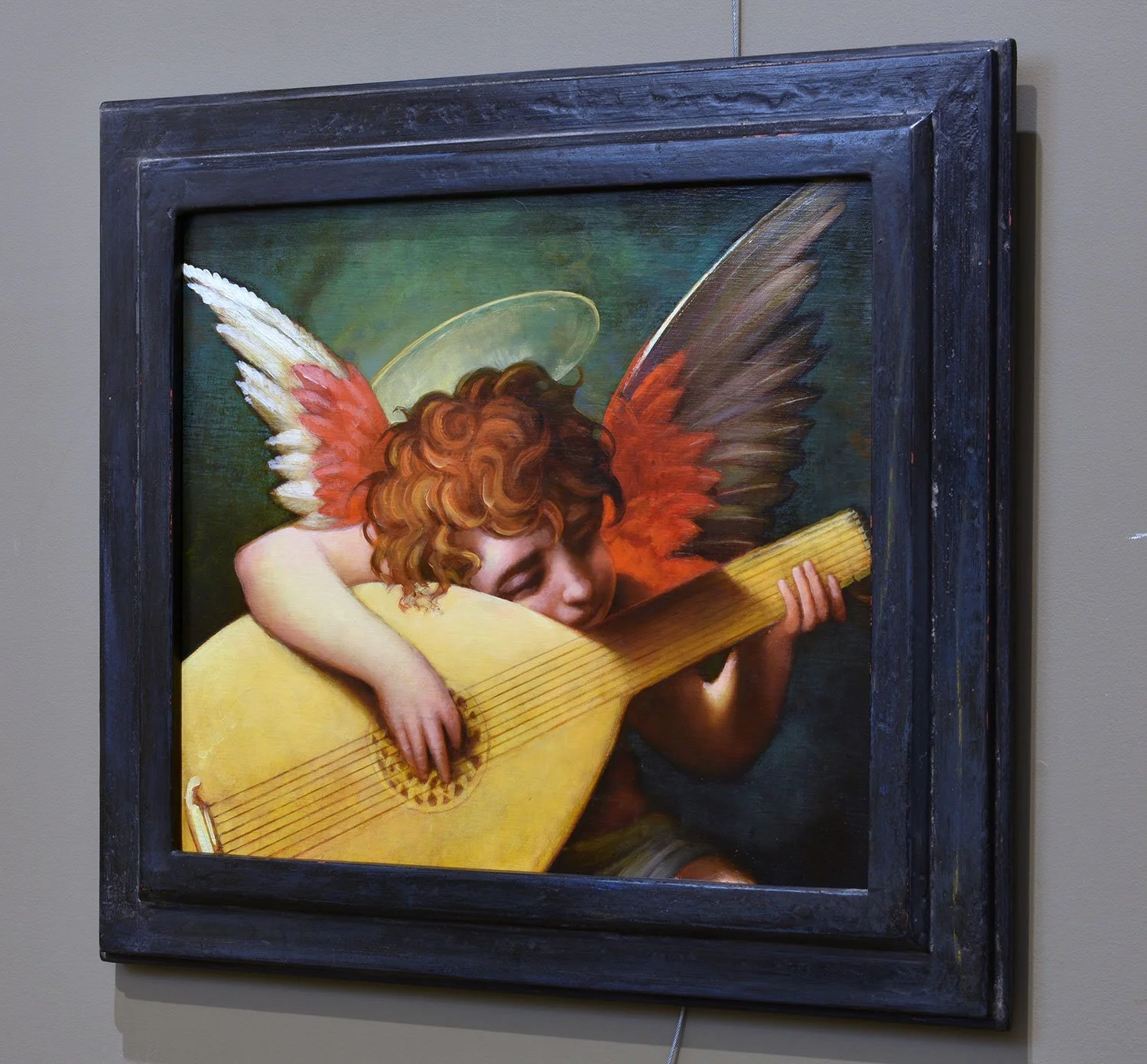
Building a Custom Picture Frame
This is a post just redirecting to my other website blog.
I recently wrote a post about building a custom picture frame and using distemper paint to finish it. You can find it at my Rabbit Hill Art Studio blog.
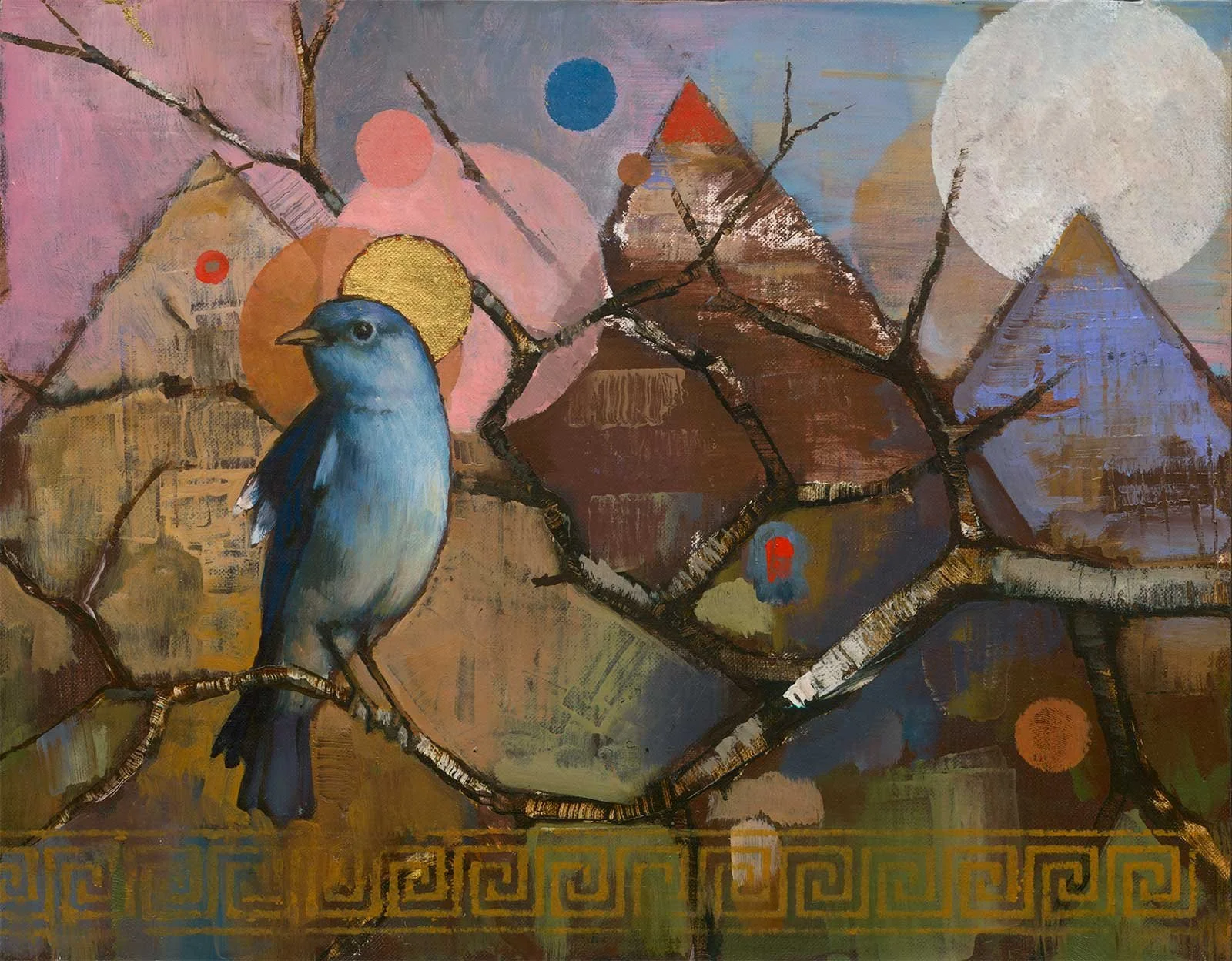
Why Every Artist Needs Their “Bird Painting”
It’s hard to hit the mark when the mark is elusive. For artist Joshua Adam Risner, 'bird paintings' are a necessary respite—a space where precision falls away and the artist can finally breathe. Discover why every creator needs a 'corner painting' to balance the weight of expectation with the need to stay in the moment.
Balancing the unknown expectations of a professional artist.
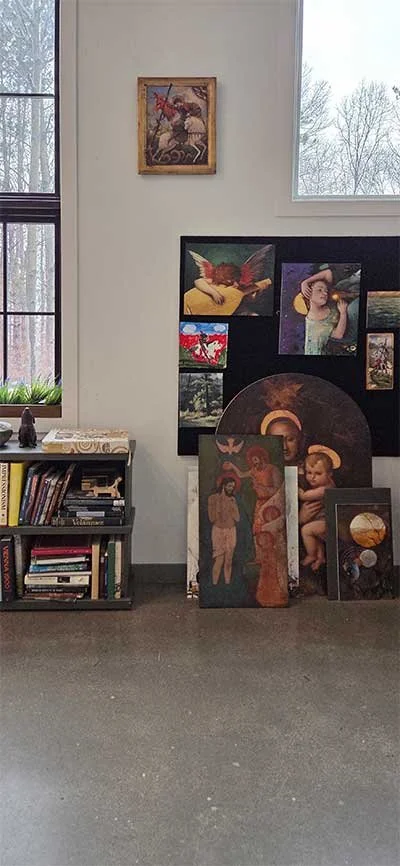
In the studio: Rabbit Hill
As an artist, the public often sees the finished product—the polished, confident strokes of a commission or the calculated precision of a gallery piece. What they don’t see is the weight behind the brush. There is a silent, heavy expectation that follows every professional artist: the expectations of clients, the critiques of peers, and the often suffocating standards we set for ourselves. It’s hard to hit the mark when the mark is elusive.
Even when an artist appears completely confident, the reality is that no one is truly fearless when they know they are about to put themselves on display in the form of a painting for all to see—the good, the bad, and the mediocre. Most of the time, I find that I am harder on myself than any client could ever be. To survive that pressure, I paint birds.
The Respite of the Perch
For me, a bird painting represents a respite. It is a space where the demand for precision falls away. When I am working on a bird, I am not answering to a brief or a deadline; I am breathing. It is a time to truly play with color, form, and texture—pushing palettes further than a client might allow and letting the paint be thick, messy, or ethereal just for the sake of the medium.

Detail: Respite in Color
The Connection to Icons
I’ve found a surprising parallel between these birds and the tradition of icon painting. In iconography, the burden of "originality" is removed. You aren't trying to reinvent the wheel; you are staying true to an essence. Precision in an icon isn't about technical perfection for the sake of ego—it’s about devotion and staying true to the spirit of the subject.
My bird paintings function the same way. They don’t need to be groundbreaking; they just need to be true.
The "Corner" Painting
"We need the high-stakes work to grow, but we need the quiet work to stay in the moment."
I believe every painter needs their version of a bird painting—something that can sit in the corner of the studio for months. It doesn't demand to be finished. It waits patiently until you figure out exactly what it needs. While the challenges of client expectations and peer reviews are vital for our growth—pushing us to reach heights we wouldn't scale on our own—they must be balanced.
Without the bird paintings, that self-criticism can become deafening. The "bird" allows for a calm and patient cadence. It’s a reminder that art can be a conversation with yourself rather than a performance for others.
We need the high-stakes work to grow, but we need the quiet work to stay in the moment.
So, if you’re a creator feeling the weight of the display, find your bird. Let it sit in the corner. Let it be the place where you simply breathe.
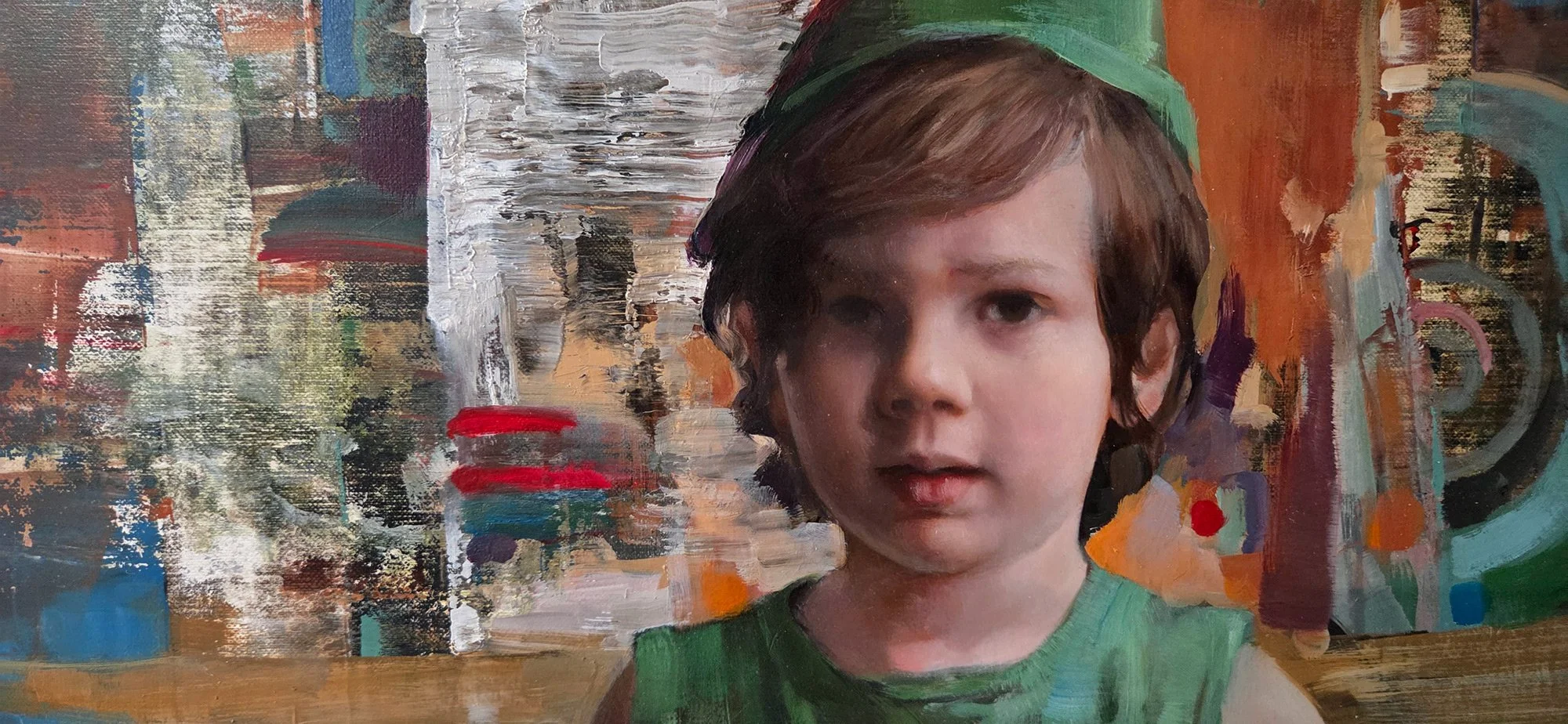
Allegorical Expressionism: Naming the Unnameable
In my studio, painting is an archaeology of the unseen. For years, I struggled to find a category for this process until I defined it as Allegorical Expressionism: a singular philosophy where a painting is not an illustration, but a vessel in flux pointing far beyond the linen. Explore the friction of the search and the pursuit of truth that grows with the artist.
Allegorical Expressionism: Naming the Ineffable
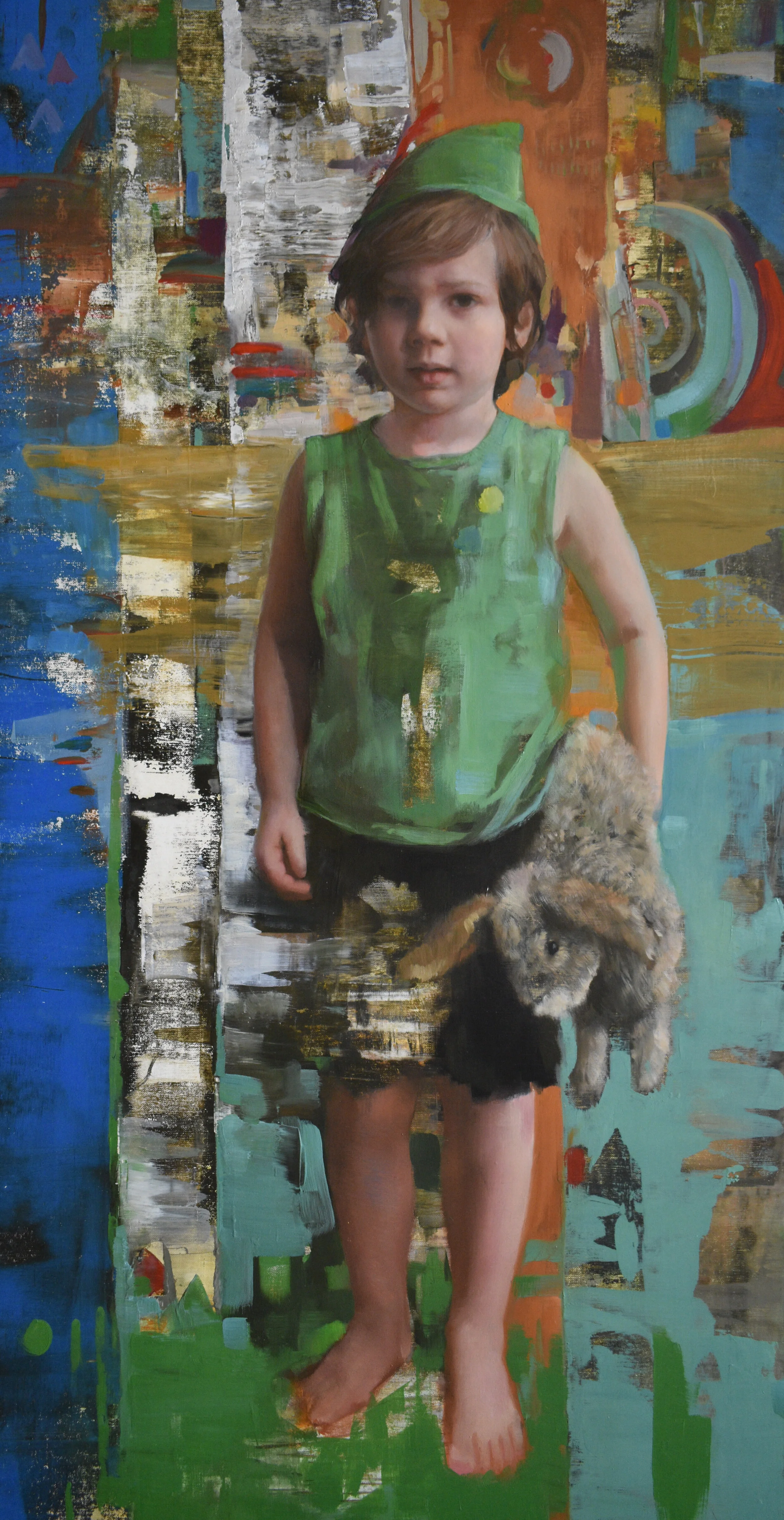
Painted by Joshua Adam Risner
I rarely start a piece knowing its true impetus; instead, I’ve found that painting is an archaeology of the unseen. For years, I struggled to find a category that fit this process, but I’ve recently come to define it as Allegorical Expressionism. This is not a marriage of disparate styles, but a singular, unified philosophy. To me, a painting is not an illustration. It is a vessel for the complexity of experience—a thing in flux that points far beyond the physical boundaries of the linen.
The Allusive Vessel
I don’t treat allegory as a closed code, a didactic puzzle, or a predetermined map. I view it as an open-ended pointing. It is a vessel that carries an idea into the viewer's space but refuses to provide a final destination. You can explore more of this specific narrative work in my Allegory gallery.
This refusal reflects the creative life itself. Because the artist is in constant flux, the work must remain fluid. The allegory is the horizon—a shifting boundary that moves with the artist and the viewer. At its best, it is a state of becoming rather than static knowing. I’m not suggesting that knowledge is purely subjective, but rather that truth is so vast it has the capacity to grow along with us.
Thinking out Loud
Painted by Joshua Adam Risner
If the allegory is the horizon, Expressionism is the grit of the navigation. It is the "raw working it out" on the canvas—a metabolic process where content and material collide. This isn't about stylistic distortion; it is the visible record of the struggle to manifest an idea. Not every artist works this way. Allegorical Expressionism is for those of us who think out loud.
My technique is eclectic by necessity. I operate under a mandate: by whatever means necessary. I am not tethered to a single school or a rigid tradition. I will use a 19th-century glaze alongside a squeegee or sandpaper if that’s what the content demands. The "expression" is the friction of the search—the map-making that happens in the heat of the process. It is the act of throwing paint onto a surface to reflect, analyze, and react.
The Pursuit Beyond the Paint
Tonalism is the philosophical connective tissue here. It’s more than a technique of soft edges; it is a pursuit of content that exists beyond the paint. I invite you to see how this atmosphere takes form in my Tonalist Gallery. The atmospheric "haze" is the physical manifestation of the allusion. It is the space where the literal ends and the infinite begins—where the moving of time is transmitted through a static art.
An Allegorical Expressionist painting is never a static object. It is alive. It is the trace of an artist using every tool in his arsenal to build a bridge toward the ineffable.
Painted by Joshua Adam Risner
I am documenting a life in motion, using the canvas to point toward a truth that is always "more than what it was the moment before."
The allegory is the what; the expressionism is the how.
This archaeology, however, is not a passive process. It requires what Rowan Williams describes as the "labor of attention."
To stand before the ineffable long enough to translate it into paint requires a specific kind of endurance—a willingness to stay present even when the subject refuses to sit still. In the coming weeks, I’ll be sharing how Williams’ ideas on attention have begun to ground my time at the easel. We’ll look at how the "labor" of the search is more than just technique; it is a way of honoring the world by refusing to look away.
The allegory is the what; the expressionism is the how. But the attention—that is the why.

A Recent Executive Commission Finished
How do you capture 23 years of vision in a single canvas? Explore the process behind my latest commission for a retiring CEO in Novi, Michigan—where a vibrant red jacket and complex layers of oil paint bring a living presence to the corporate boardroom.

Commemorating a 23-Year Legacy: A CEO Portrait for Novi, Michigan
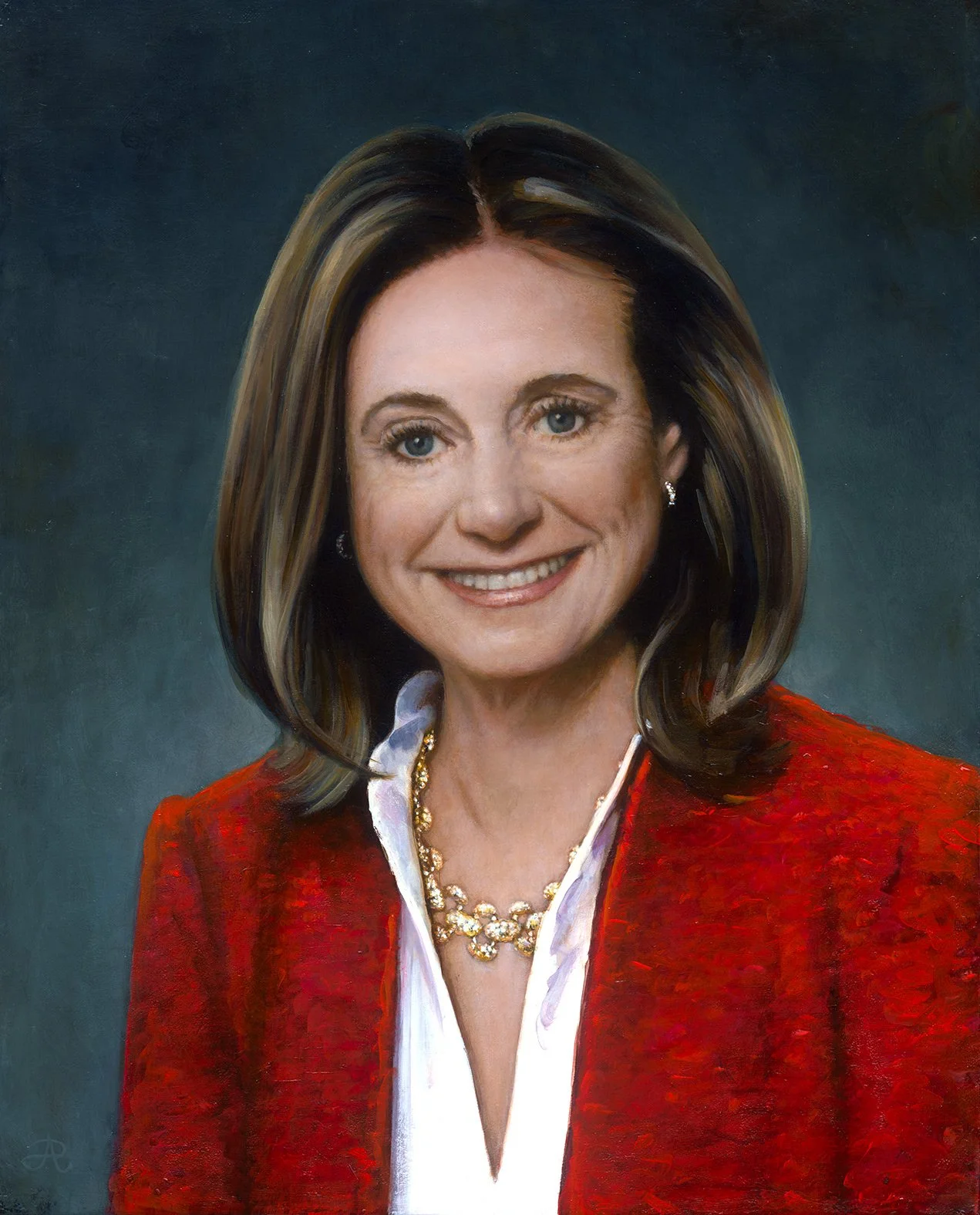
Capturing the legacy of a leader is a staple of corporate history, but some commissions carry more weight than others. I recently completed an oil portrait for a distinguished leader in Novi, Michigan, who is retiring after serving as CEO for 23 years. This piece is destined for the permanent collection in their corporate headquarters, acting as a lasting tribute to over two decades of vision and growth.
A Modern Touch in Traditional Executive Portraiture
While many boardroom paintings lean toward the conservative, this CEO brought a wonderful sense of personality to the sitting. The choice of a vibrant red jacket was a highlight of the process—the bold color adds a physical warmth to the entire composition and serves as the perfect visual complement to her engaging smile. It allowed me to bridge the gap between traditional prestige and the dynamic, approachable energy she brought to the Novi business community throughout her long tenure.

The Living Presence: Complexity in the Layers
To achieve a "living presence" in a professional oil portrait, one must look beyond the surface. In the flesh tones of this piece, there is a complex archaeology of paint. By layering transparent glazes over solid pigment, I create a surface that responds to the light of the room—much like a person’s skin does. This depth is what distinguishes a fine art commission from a flat digital print, providing a sense of vitality that matches a career as impactful as 23 years at the helm.
In a professional setting like an executive office, the painting shouldn't just be a likeness; it should feel like a tangible record of a life’s work. This visual vibration is only possible through the slow accumulation of history on the canvas.
The Living Legacy: Commissioning a Master Oil Portrait
A portrait is more than a likeness; it is a synthesis of a life lived. Discover the philosophy of the "Living Presence" and the museum-grade process behind commissioning a master oil portrait at Rabbit Hill Art Studio—where 19th-century Tonalist tradition meets a modern legacy.
The Living Legacy:
Commissioning a Master Oil Portrait
By Joshua Adam Risner
For centuries, the oil portrait has served as the ultimate medium for preserving a legacy. It is more than a mere likeness; it is a "living presence" captured on canvas.
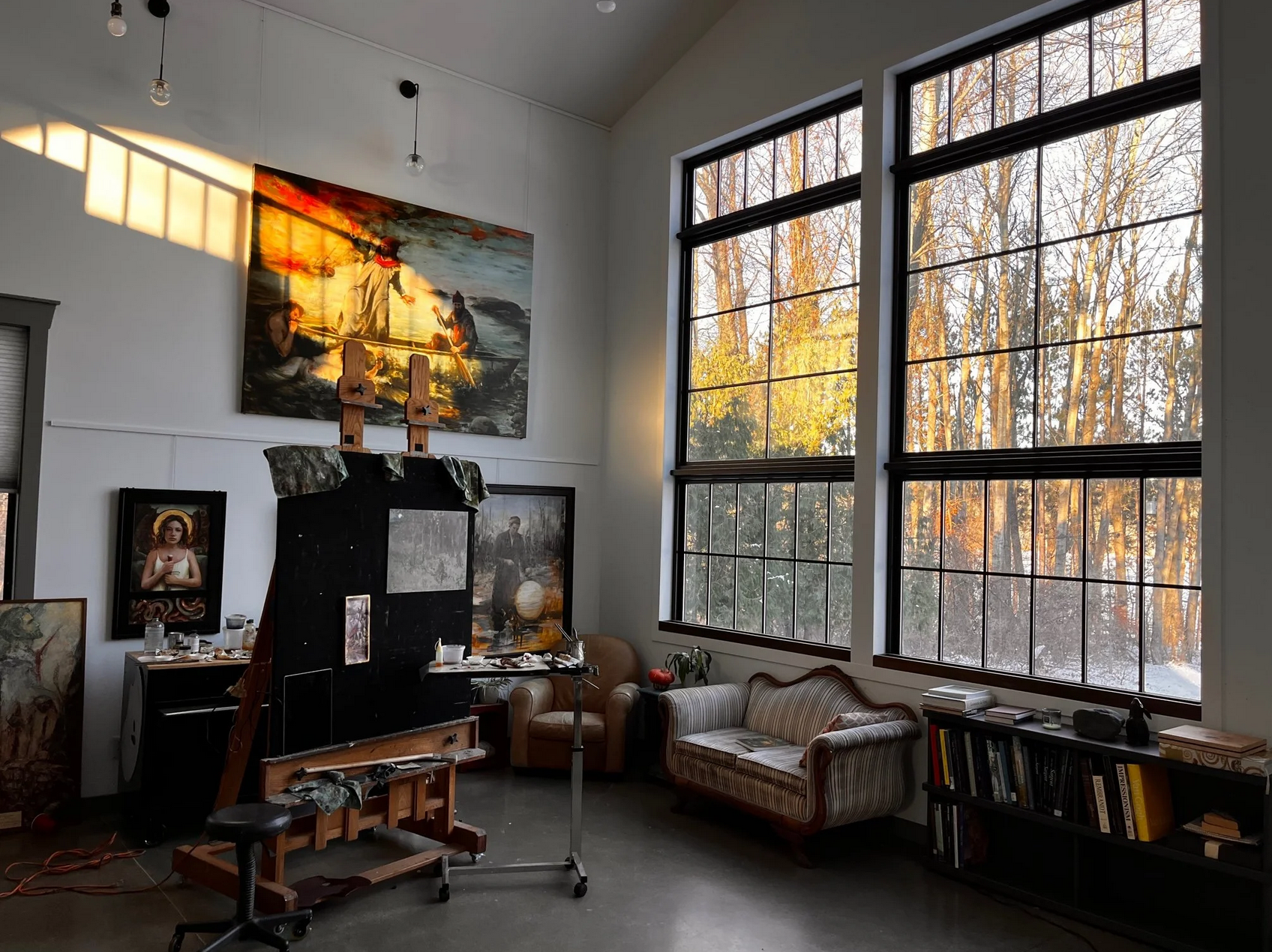
Rabbit Hill Art Studio: Where traditional craftsmanship meets contemporary legacy.
At Rabbit Hill Art Studio, my work is dedicated to this tradition—creating masterworks that serve as a bridge between the present and the future. Whether for an executive, a family, or a private collector, a commission is a collaborative journey into the heart of a subject's character. It is an investment in an heirloom that carries the weight of a lifetime, crafted with the same rigor and archival standards found in the world’s most respected galleries.
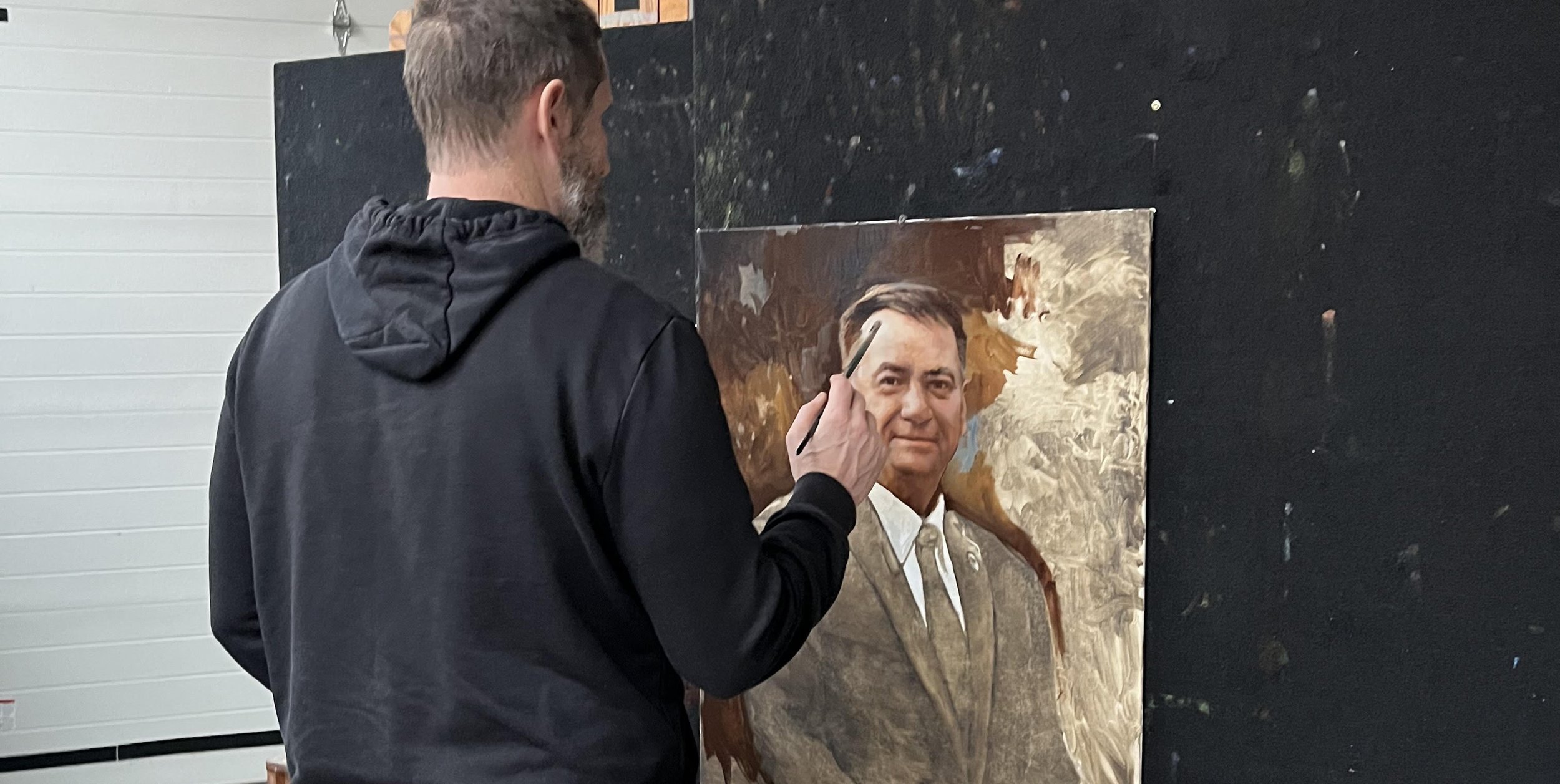
The work in progress: Translating personality through technical rigor.
Beyond the Snapshot
In an age of instant digital imagery, the hand-painted portrait stands apart because it offers something a camera cannot: duration. A photograph captures a millisecond; a painting synthesizes hours of observation, thought, and artistic translation. My goal is for every portrait to possess a quiet confidence that speaks to future generations.
Whether we work through traditional live sittings or through photographic reference, the objective remains identical: to find the "inner architecture" of the face. Whether it is photographs or sittings, the goal is the same—to capture the essence of the personality. I prefer to work from life whenever possible, as it allows for a unique spirit and nuance that only a face-to-face interaction can reveal, but the "Living Presence" is always the true north of the project.
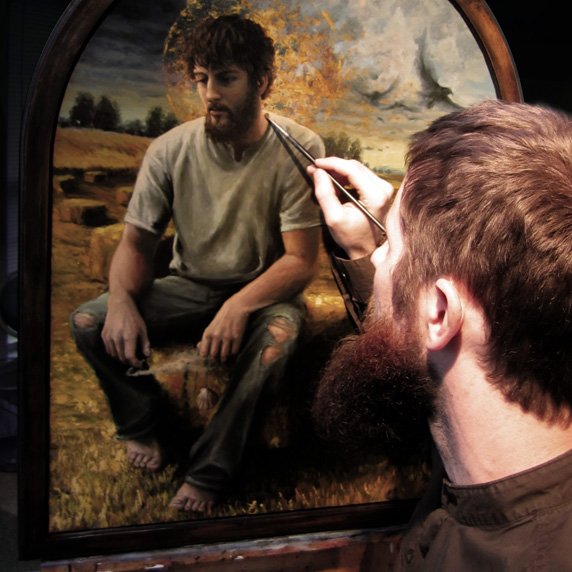
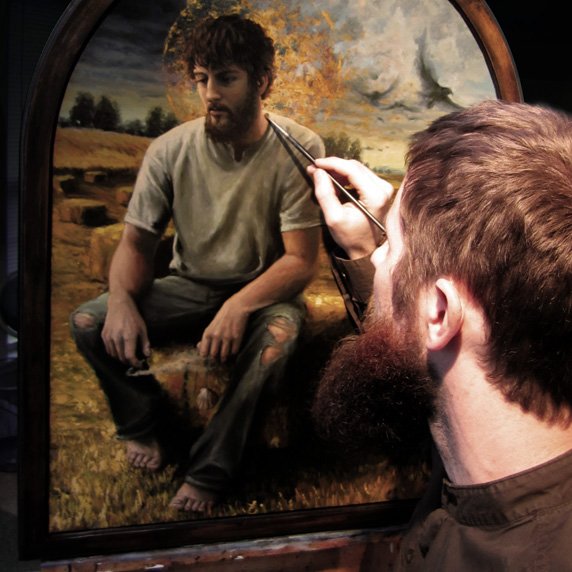
The artist at work: Synthesizing the subject's essence with traditional craftsmanship.
A Museum-Grade Process
Commissioning a portrait at Rabbit Hill means investing in archival excellence. Inspired by the 19th-century Tonalists like George Inness, I focus on the atmospheric quality of light and a harmonious palette. This creates a psychological space that the viewer can actually inhabit.
To ensure these works survive as family treasures for centuries, I employ conservation-standard methods in every stage of production. I often mix my own oil paints and hand-craft frames to ensure the entire piece—from the pigment to the wood—is an heirloom-quality object. We aren't just making a record of what you look like; we are creating a piece of fine art that breathes.
Securing Your Place in History
I am currently accepting inquiries for private, corporate, and institutional commissions. The process begins with a conversation about the subject, the setting, and the story you wish to tell. If you are looking for a high-quality artist in Michigan to translate a life lived into a work of art, I invite you to reach out.
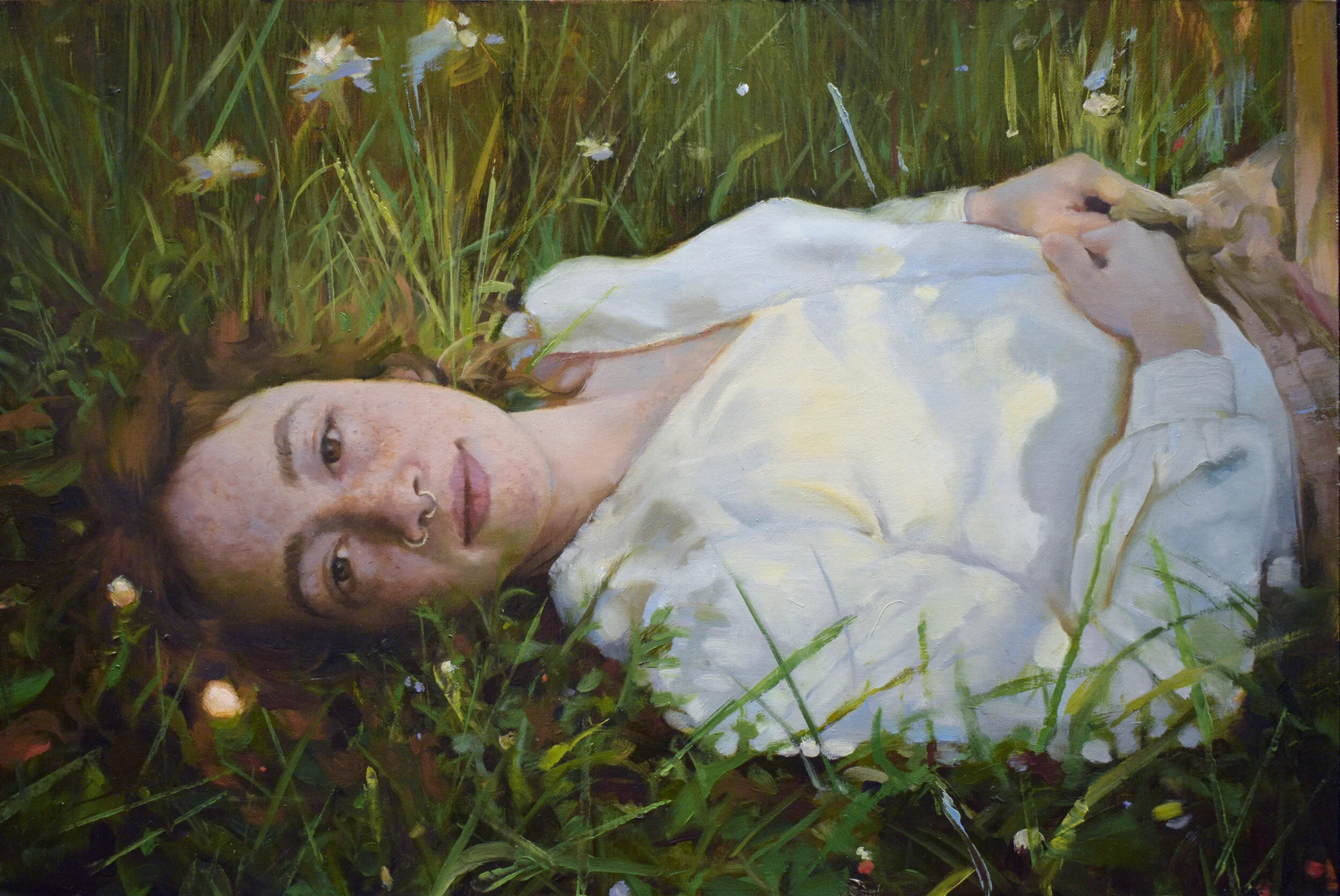
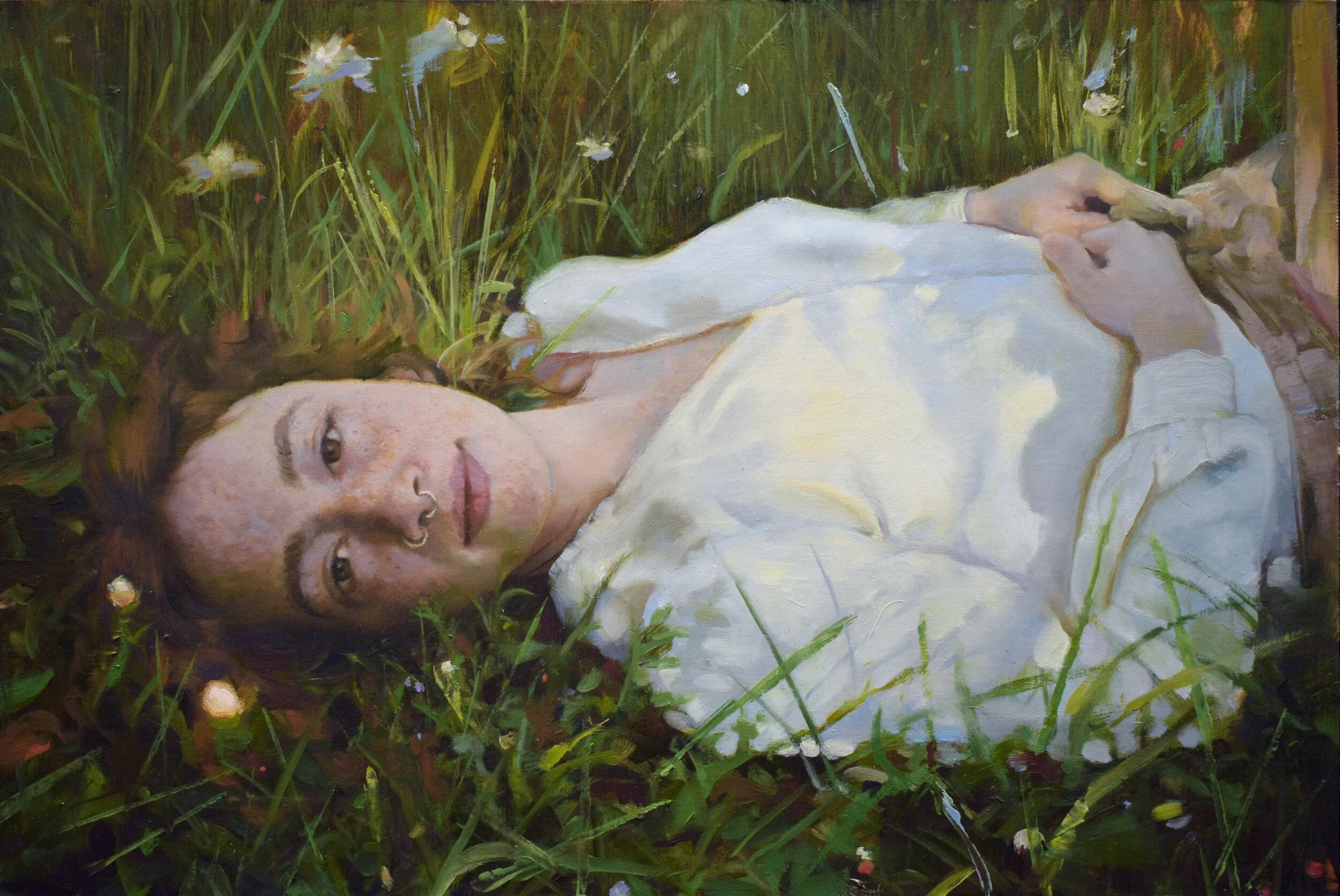
The Living Presence: To Smile or Not to Smile?
In our 'Say Cheese' culture, we’ve been conditioned to believe that a smile is the truest version of ourselves. But for a portrait artist, the goal isn't to capture a reflex—it's to manifest a Living Presence. Explore why the potential for a smile is more powerful than the grin itself, and how the philosophies of Tonalism and Cubism allow a painting to breathe in a way photography never can.
Why I Might Ask You Not to "Cheese"
By Joshua Adam Risner
We live in a "Say Cheese" culture. The second a camera comes out, most of us have a practiced reflex—a quick, muscular "on" switch where we show our teeth and signal to the world that we’re doing just fine. It’s a great tool for a holiday card, but for a painted portrait, we’re looking for something deeper. We’re looking for what I call a Living Presence.
When you look at a great historical portrait, you’ll notice that people rarely grinned. It wasn’t because they were miserable; it was because they understood that a portrait is a long-term investment in a person’s legacy.
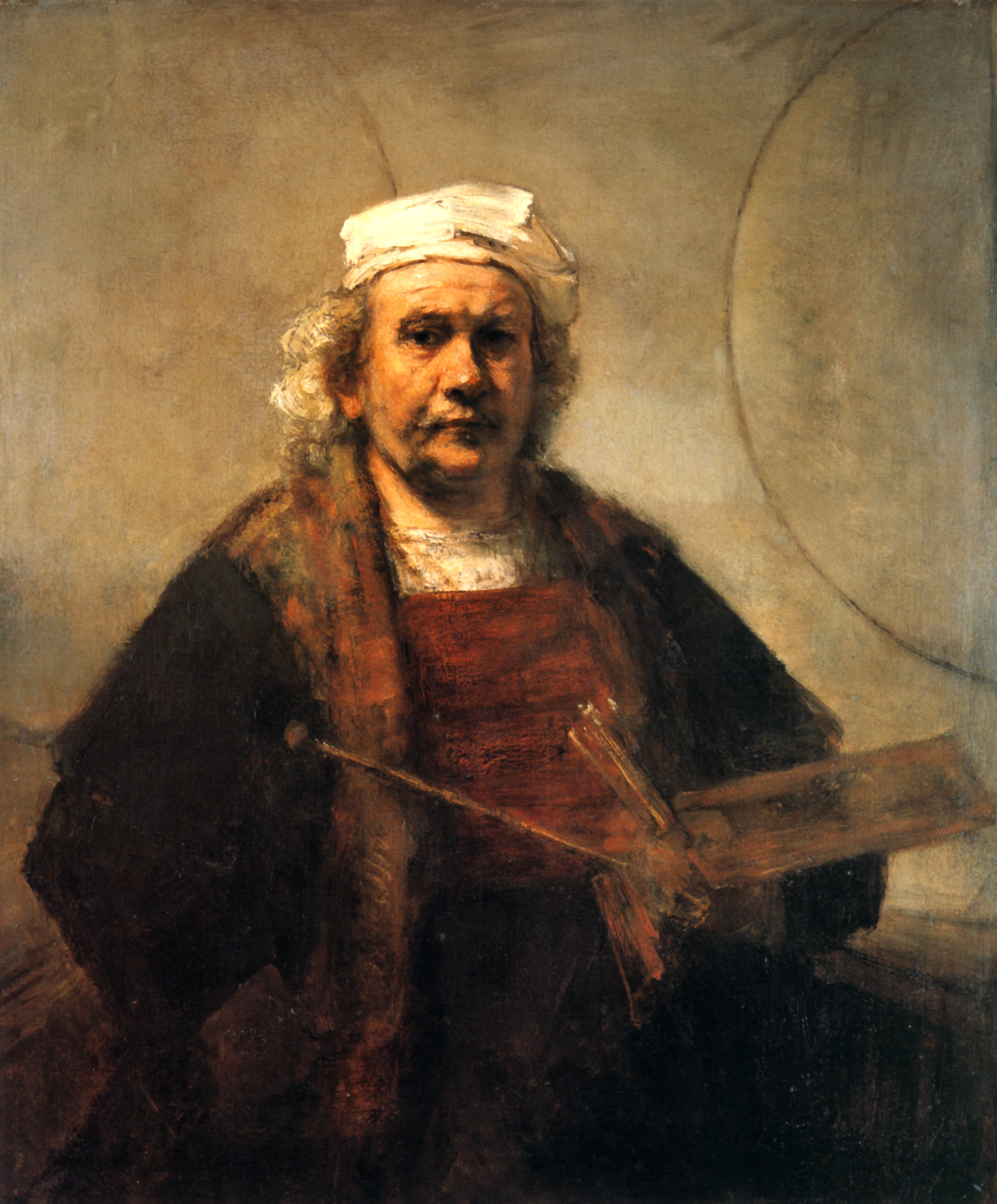
Rembrandt’s Self-Portrait: A gaze that holds the weight of a lifetime.
The Architecture of a Thought
A smile is a fleeting event—it lasts a second and then it’s gone. To freeze that one-second grin in oil can actually flatten a person, reducing a complex human being to a single, static impulse. When your mouth is closed and your expression is neutral, there is a potential for a smile. It creates a bit of a mystery. Because you aren’t telling the viewer exactly how to feel, they have to work a little harder. They start to wonder: What is he thinking about? Who is she, really? That tension is what makes a painting a conversation that lasts for generations. The reason it lasts is because the viewer can bring a bit of themselves to the experience. A smile says it all; a neutral gaze asks a question.

John Singer Sargent’s Lady Agnew: Caught in a living motion.
A Moment That Captures Many Moments
There’s a big difference between a lens and a brush. A camera captures a millisecond. A painting captures a duration. We all know we look different in every photo, but a painting needs to look like all the photos. It needs to speak to the whole of what you look like. The essence.
I often think about the "Simultaneity" found in Cubism. Even though I paint realistically, the spirit of my process is similar. The way Picasso tried to paint the essence of three-dimensional form on a two-dimensional canvas is the same way I try to paint a 3D personality on a 2D canvas. A portrait isn't just "you at 2:00 PM on a Tuesday." It’s a synthesis of your past, present, and future. When we move past the performance of a smile, we find the "inner architecture" of the face—the part of you that exists when no one is watching. The result is a face that doesn't feel "frozen." It feels like it is continuously happening.

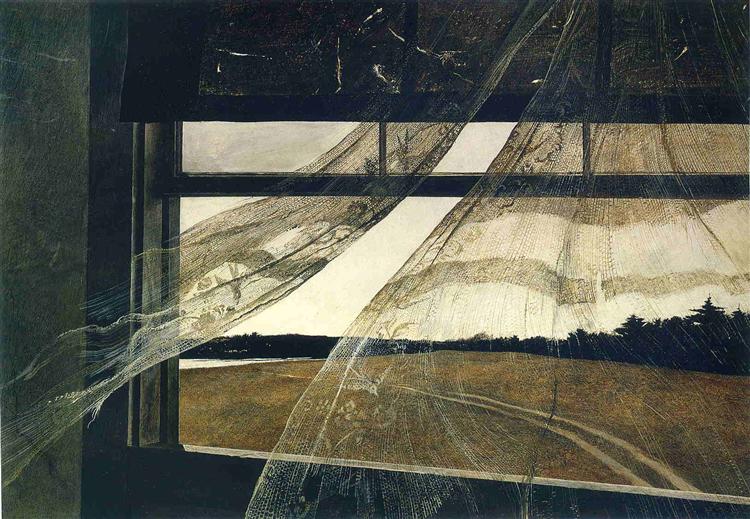
Inness and Wyeth: Capturing the "vapor" of a scene and the passage of time.
The "Atmosphere" of the Soul
I’ve always been inspired by the Tonalist painters, like George Inness. They didn’t just want to paint a static field; they wanted to paint a "living motion." They wanted to capture what it was like to be in the landscape, not just a picture of a moment. I try to bring that same "motion" into my portraits. A serious face isn't "grumpy" or sad—it has gravitas. It suggests a person governed by quiet strength and reason. It suggests something happened before and something will happen after.
Andrew Wyeth understood this perfectly; his work captures a profound, heavy stillness that feels alive because it captures the quiet passage of time. He doesn't just paint a face; he paints the air around the person. This creates a psychological space that the viewer can actually inhabit.
The Portrait as a Chord
If a snapshot is a single note, a portrait with a Living Presence is a chord. It takes multiple notes—different moods, moments, and perspectives—all struck at the exact same time to create a harmony that feels truly human.
When you sit for a portrait with me, my goal is to help that performance drop. We aren't just making a record of what you want to look like, or what you think you look like; we’re creating an experience of who you are. It’s an image that doesn't just sit on the wall—it breathes. It’s a life lived.
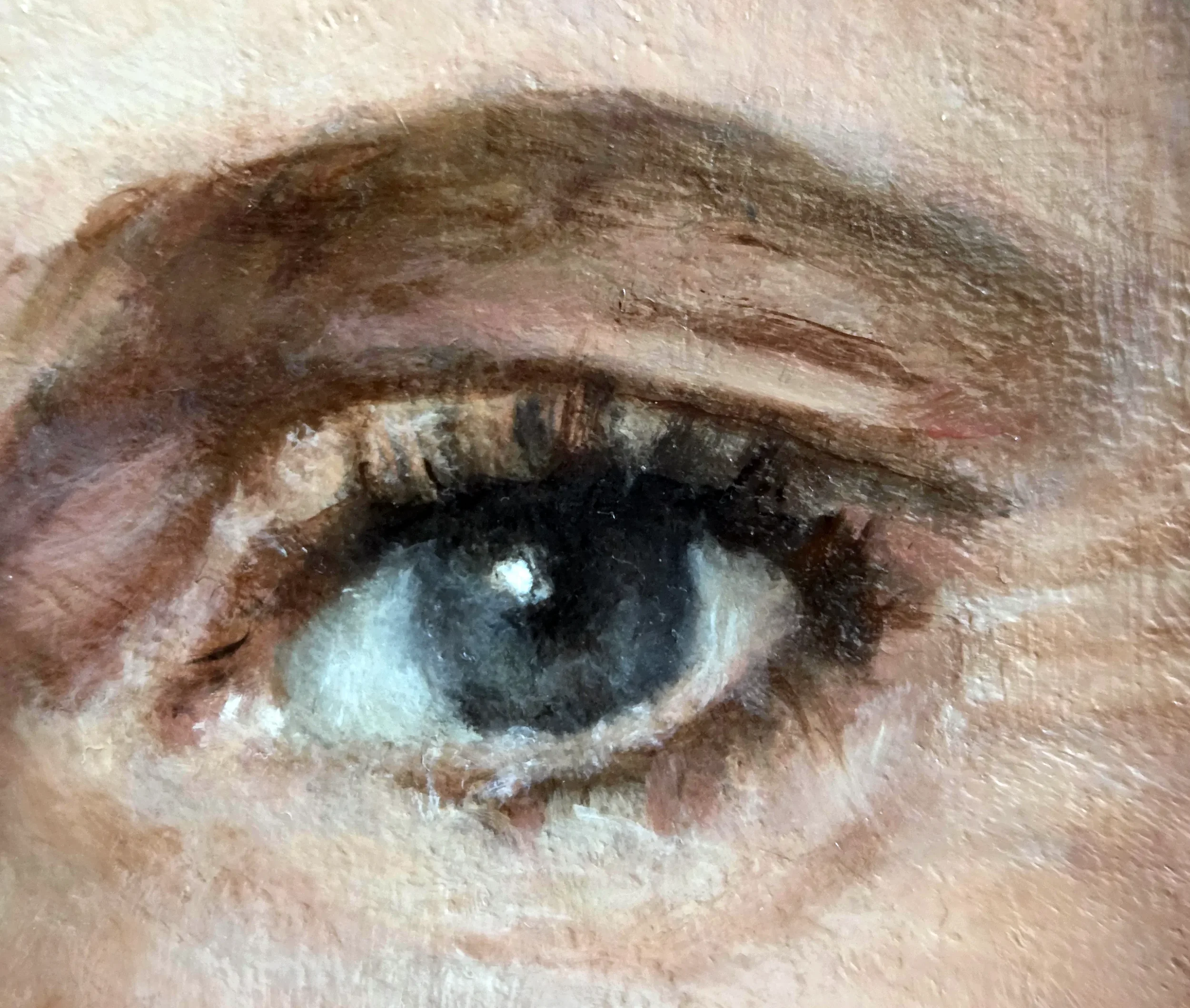
The Archaeology of a Painting:
A painting cannot come to life in a single day. A living presence isn't the result of perfectly executed brushstrokes; it is something that accumulates through a 'fractured mess' of greatness and failure. Explore why there are no shortcuts to the soul of a portrait and why the 'archaeology' of physical paint can never be replicated on a digital screen.
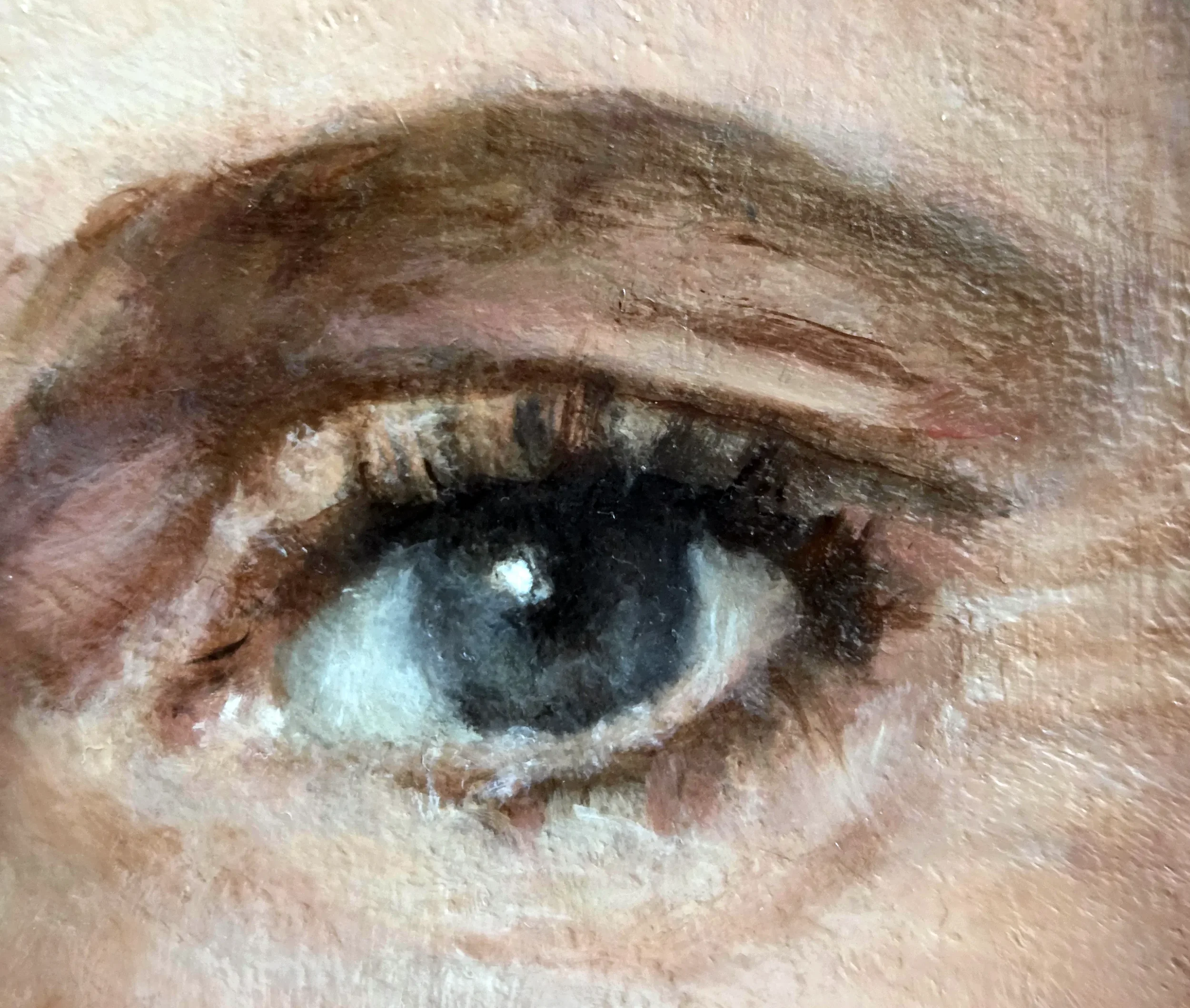
Why There Are No Shortcuts to a Living Presence
As a portrait artist, I am frequently asked what gives a painting its "living presence." People often assume it’s a matter of technical precision—getting the anatomy exactly right or matching a skin tone perfectly. But after years at the easel, I’ve realized that a living presence isn't the result of a series of perfectly executed brushstrokes; it is something that accumulates.
The Illusion of the "One-Day" Masterpiece
A painting cannot come to life in a single day. A day of painting is merely a snapshot. To instill life, you need the passage of time and the emotional "up and down" of the process. The studio is often a battlefield of contradictions and conflicts.
It is a constant Tug of War. One day, the eyes are perfect, but the rest of the face is a ghost. The very next day, those same eyes feel like lead, and I have to tear them down to save the rest of the composition. I am constantly pushing and pulling pigment, trying to keep the work in that elusive "sweet spot" of harmony where everything finally decides to play well together.
A Fractured Mess of Greatness
The evidence of this tension is palpable when you stand in front of a museum-quality masterpiece. You can actually feel the weight of a painting that sat on the edge of failure. This is something a single day of work—or a single lifetime of shortcuts—can’t replicate.
Just as a painting cannot be perfected in a day, an artist cannot master this battlefield without a lifetime of persistence. Most people don’t realize that this is exactly why a digital screen can’t replicate the experience of seeing a great painting in person. On a screen, you are only looking at the top layer. In person, you are looking at a fractured mess of greatness and failure.
The Archaeology of the Surface
This happens because as you peer through the initial surface, your eye begins an archaeological dig. Subliminally, you see the evidence of the struggle:
- The "bad" layers that had to be sacrificed.
- The corrections, the shifts in light, and the pentimenti (the traces of earlier marks).
- The physical depth of the pigment built up over weeks or months.
This archaeology of paint is the true substance of the work. It creates a visual vibration that the human eye detects as "life" because it is the life—the literal record of the painting being brought into the world. It’s not unlike pregnancy: there is going to be pain, and there is going to be a struggle, but it is the only way to reach the end.
Why Digital Feels Flat
This is why a digital presentation can feel so dead. A screen flattens the history of the piece into a single, glowing plane. It strips away the three-dimensional record of the artist's persistence.
Conversely, this is also why mediocre, "flat" paintings often look better on a smartphone than they do in a gallery—the screen provides an artificial, digital complexity that the physical object lacks. In person, there is no hiding. The canvas either has the history, or it doesn't.
No Shortcuts to the Soul
There is no "hack" for a living presence. You cannot glaze your way into a soul, and you cannot fake the depth that comes from genuine struggle. You simply have to buckle up, stay in the chair, and persist until the paint finally reflects the complexity of a human life.
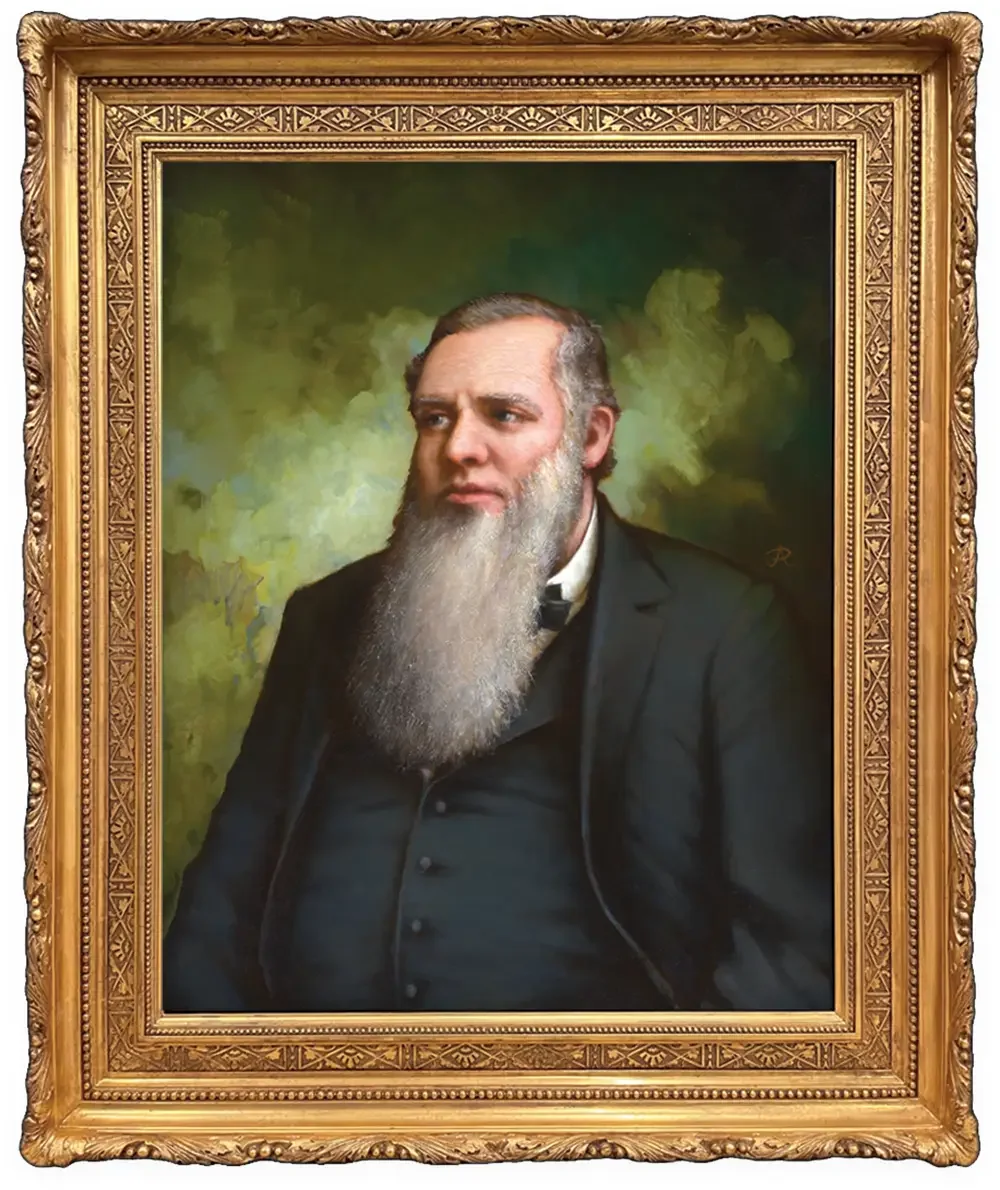
Painting History: My New Portrait of Governor John Bagley
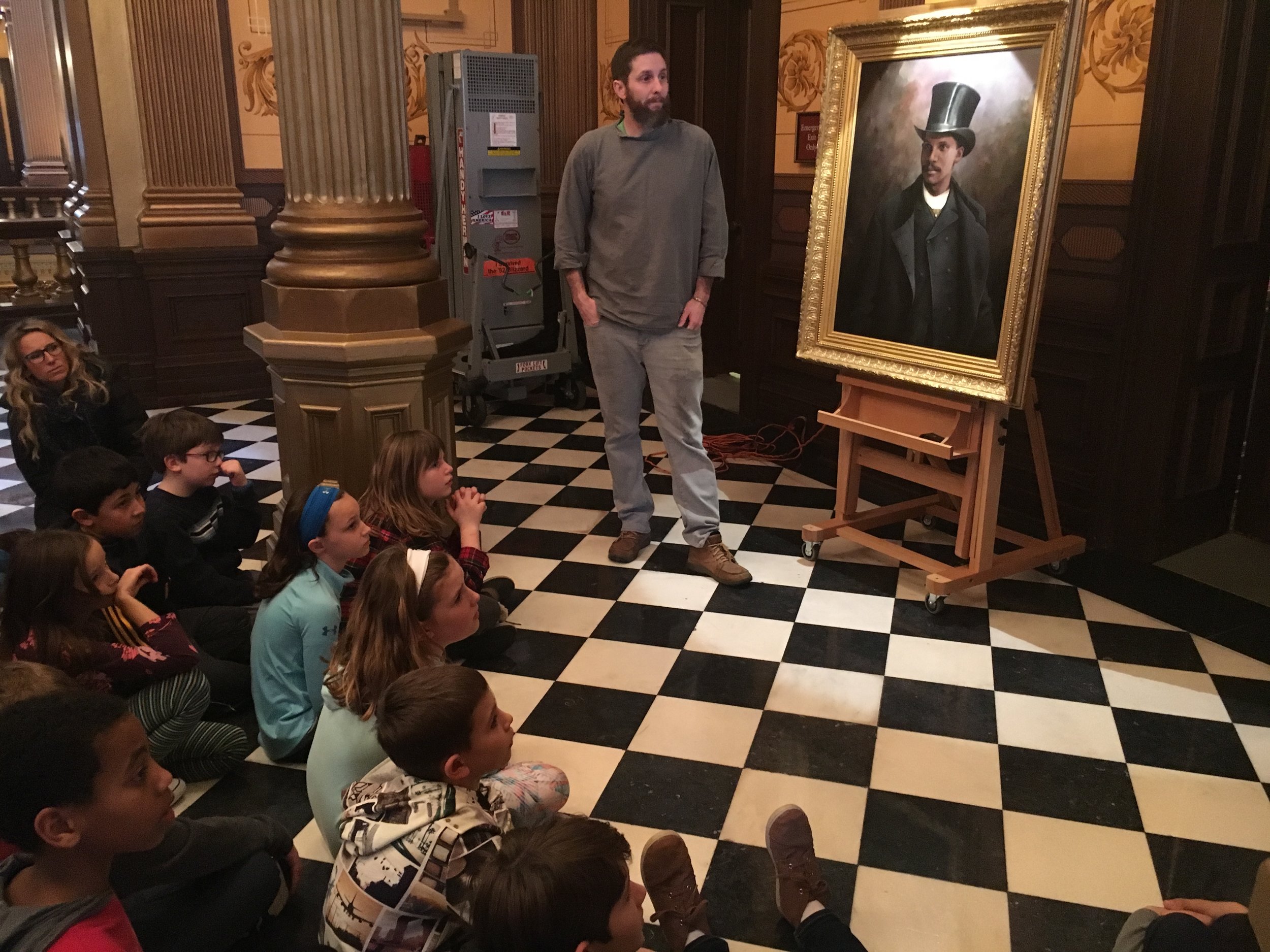
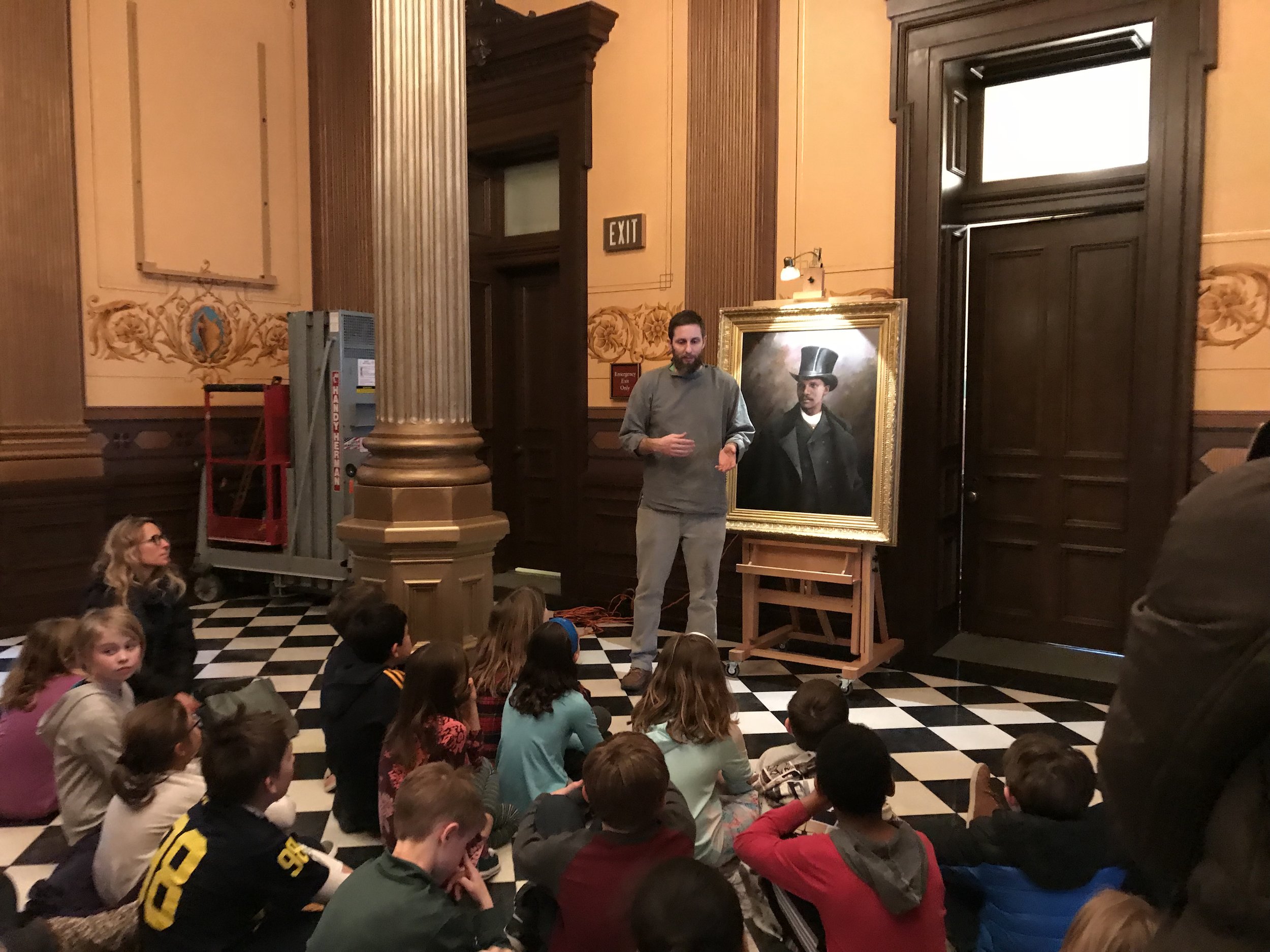
"While the Capitol houses dozens of portraits, its newest addition honors a legacy from the 1870s. Joshua Risner, the Capitol’s artist-in-residence, recently completed a new portrait of Governor John Bagley, who led the state during the transition from a wooden structure to the iconic building we know today. The project required a deep dive into historical records to ensure that Bagley’s likeness and the era's gravitas were perfectly preserved for future generations."
I’m thrilled to finally share a project that has been a true labor of love and history. As the artist-in-residence for the Michigan State Capitol, I recently had the honor of painting a new portrait of Governor John Bagley—the man who actually oversaw the construction of the building where my work now hangs. It was a unique challenge to capture the spirit of a leader from 150 years ago, and I’m proud to see him finally take his rightful place among his peers in the Capitol collection.
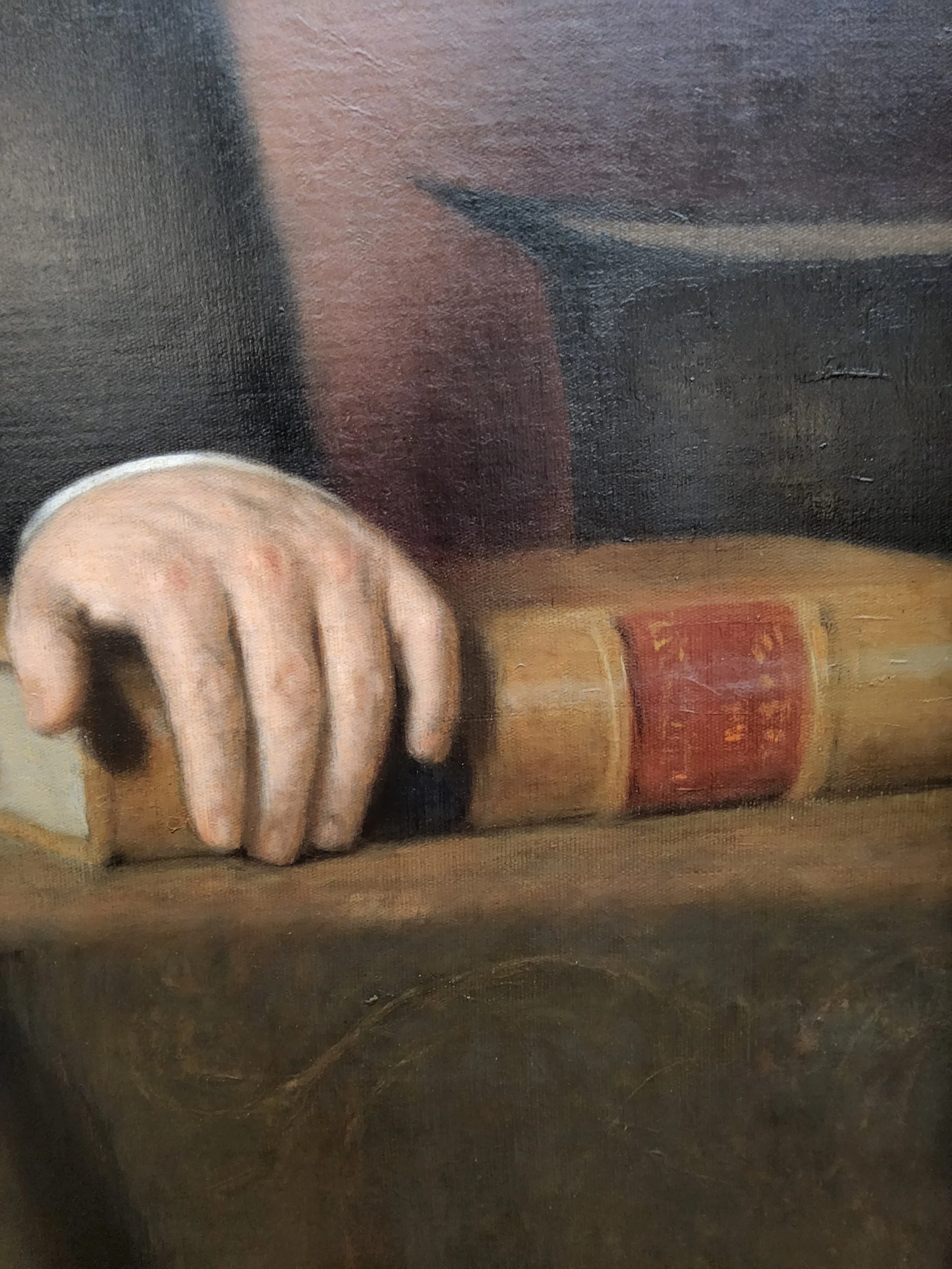
More Than Meets the Eye: Decoding the Portraits of Lewis Ives
We often view 19th-century portraiture as a purely classical craft—a slow, deliberate process of brush and canvas. But after taking a closer look at the work of Lewis Ives, one of the Michigan State Capitol’s most prolific artists, I discovered a hidden layer to his "timeless" style. It turns out Ives was a bit of a modernist in disguise, utilizing "high-tech" shortcuts of his era to create those portraits designed to be treasured for generations. Here is how his secret process was hidden in plain sight.
I’m excited to share a new piece I wrote for the Michigan State Capitol Arts collection! I took a deep dive into the work of Lewis Ives to see if there was more to his portraits than meets the eye. As it turns out, a closer look reveals he was actually ahead of his time, blending traditional painting with modern photographic shortcuts to create those portraits designed to be treasured for generations. If you’ve ever wondered how 19th-century artists managed to capture such incredible detail, you can read my full breakdown of his "modern" secrets here:
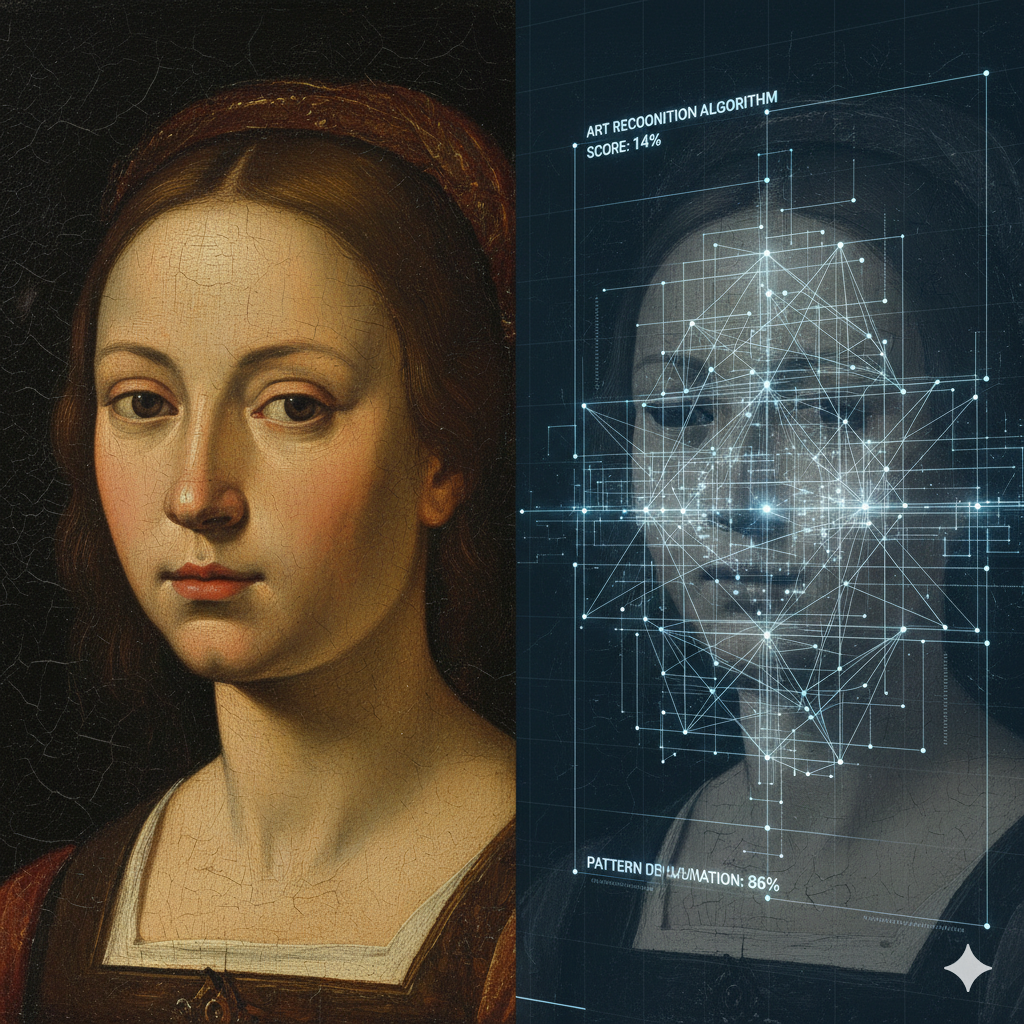
The Algorithm of Attribution
In the high-stakes world of art attribution, a new arbiter has arrived: the algorithm. Recent AI analysis has sent shockwaves through the industry, casting doubt on long-accepted masterpieces by Jan van Eyck. But as a painter, I find myself asking: can a digital scan truly capture the 'battlefield' of a canvas? While the experts use technology to validate lucrative labels, they often overlook the physical reality of the studio—the messy, inconsistent, and deeply human process that no machine can truly map. Is AI settling the score, or is it just providing a new veneer for old lies?
The Algorithm of Attribution
Why do we care about authenticity anyways?
Artificial intelligence is now entering the high-stakes arena of art attribution, attempting to settle age-old debates with cold, hard data. A recent report in The Guardian details how AI analysis has cast significant doubt on two versions of Saint Francis of Assisi Receiving the Stigmata, long attributed to the Flemish master Jan van Eyck. The Swiss company Art Recognition used brushstroke analysis to determine that the Philadelphia Museum of Art’s version was “91% negative” for Van Eyck’s hand, while the Turin version was “86% negative.”
 The Arnolfini Portrait: The Benchmark
The Expert’s Blind Spot
The documentary The Lost Leonardo (2021) serves as a perfect cautionary tale for this phenomenon. It chronicles the "discovery" and $450 million sale of the Salvator Mundi, a painting whose attribution to Leonardo da Vinci remains highly contentious. Watching the film, one sees how easily "truth" becomes secondary to power and profit. From my perspective, in the Salvator Mundi, certain passages, such as the hands, show a master’s touch, while others obviously lack the finesse of a genius. Yet, experts and dealers pushed the narrative until the price tag became too big to fail.
This highlights a fundamental issue: I’ve always believed that to truly identify a master’s work, one must have at least a minimal understanding of how to hold a brush. Art historians are notoriously prone to over-interpreting aesthetic choices. For example, they often attribute a sitter’s expression to "narcissism" or "arrogance," whereas an artist knows that we frequently adjust features simply to make the subject look better. We don’t want to paint ugly people. I have also lost count of how many times I’ve had to explain basic media and process to an art historian. I don’t need a spectrometer to see how an image was built; I use my eye and my experience. This just points out how certain aspects of the art world treat art like a science where they can label and categorize things into neat little boxes.
The Flaw in the Machine
 Salvator Mundi: A Narrative of Profit
The Battlefield of Creation
This leads to a larger question: Why does the name on the frame matter more than the quality of the work? The answer is simple: investment. If we valued art for its innate qualities—the "shimmering light and supernatural clarity"—then the culture's obsession with attribution would vanish. Maybe this is the most positive thing AI is going to do. When everything can be made by anybody, maybe the “anybody” will become less relevant.
There is also another silver lining. If AI can reduce an artist’s work to a replicable algorithm, it inadvertently defines what art we value as a whole. Maybe we will learn to see that creativity is usually not a standardized process; it is a much messier, like a battlefield. It is the mess of the studio, the constant pivot through mistakes, and the search for a path through the "battlefield" of a canvas.
AI might help experts validate lucrative, inaccurate attributions by providing a veneer of scientific certainty. But for the artist, it serves a different purpose: it proves that the soul of a painting lies in the parts that can’t be calculated—the grit, the struggle, and the human inconsistency that no algorithm can truly map. For me, AI has clarified where the real value is in art and I can easily say it’s not in the easily recognizable patterns of brushstrokes. It’s obvious to most people that the value of art is going to shift in the near future, but it is less clear for most where it will land. I personally believe it is helping us get rid of the high value we place on attribution and we will thank AI for the help whens its all said and done.
Where did all the Picture Frames Go?
Why Modern Art deleted the Picture Frame

The picture frame, for centuries, served as more than a mere border; it was a threshold. It demarcated the artwork as a separate reality, a "window" into another realm. This realm was not merely a reflection of the material world, but often symbolized the heavenly or transcendental. From gilded Baroque extravaganzas to the simple elegance of Neoclassical moldings, frames played a crucial role in how art was perceived and valued, often investing the image with a sense of sacredness or elevated importance. However, the advent of modern art saw a significant departure from this tradition, with artists increasingly abandoning or radically reinterpreting the frame. This shift reflects profound changes in artistic philosophy, the role of the artwork, and the relationship between art and the viewer.
One of the primary reasons for the frame's decline lies in modern art's rejection of illusionism and the embrace of materiality. Traditional frames often enhanced the illusionistic depth of a painting, emphasizing its function as a window onto a scene, particularly a window that might depict an idealized or divine reality. Modernist movements, however, sought to break down this illusion. Cubism, for example, fragmented and flattened pictorial space, drawing attention to the canvas as a physical object. Artists like Picasso and Braque were more concerned with the formal elements of art—line, shape, color—than with creating a convincing representation of reality or a symbolic gateway to the divine. In this context, the frame became a superfluous barrier, separating the artwork from the very materiality it sought to celebrate.
Furthermore, the rise of "art for art's sake" liberated artists from the constraints of patronage and traditional subject matter. No longer bound to depict historical narratives or religious scenes for wealthy clients, artists explored abstraction, emotion, and subjective experience. This newfound freedom extended to the presentation of their work. The ornate frames that had once signified status, value, and a connection to a higher power became irrelevant, even contradictory, to the radical newness of the art itself. Artists sought a more direct and unmediated relationship with the viewer, and the frame was perceived as an obstacle to this immediacy.
The changing role of the artwork also contributed to the frame's diminishing importance. As art moved out of the private salon and into the public museum, its function shifted from decoration and status symbol to a more democratic and educational one. The emphasis was on the artwork itself, not its surroundings. Moreover, movements like Minimalism further stripped art down to its essential elements, rejecting any extraneous ornamentation. A simple, unframed canvas or a raw, industrial sculpture became the epitome of artistic purity.
In conclusion, the disappearance of the traditional picture frame in modern art was not merely a stylistic choice but a fundamental shift in artistic philosophy. It reflected a rejection of illusionism, a celebration of materiality, a newfound artistic freedom, and a changing relationship between art and the viewer. The artwork was no longer primarily a window into a transcendental realm, carefully contained and separated from reality, but rather an object in its own right, existing in and engaging with the space of the viewer.
Transcending mere Representation
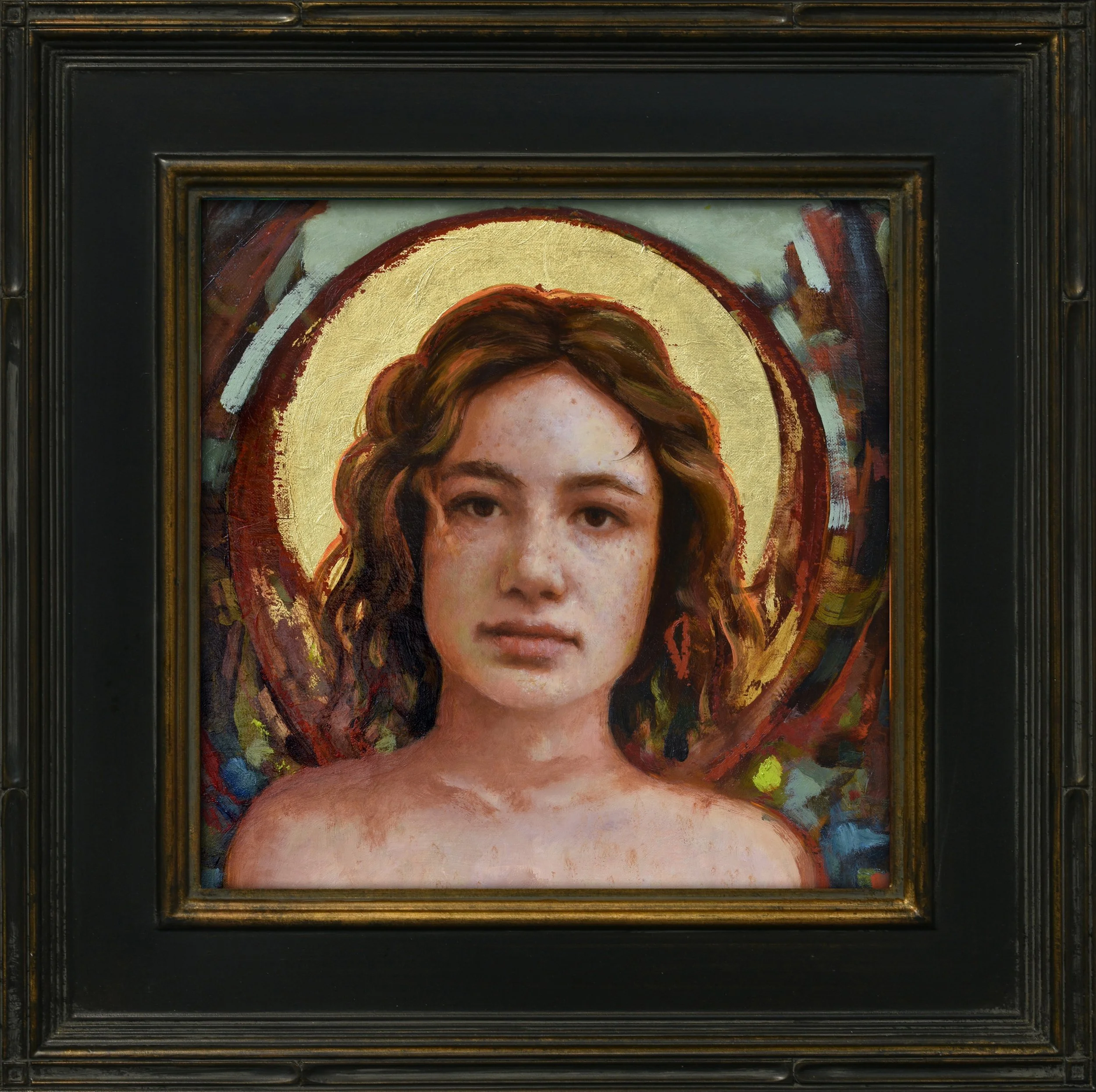
Joshua Adam Risner's art seeks to capture a vital "living presence," influenced by Tonalism and Inness, while his allegorical works explore his understanding of reality through a blend of historical and contemporary symbols, creating timeless yet relevant images.
My artistic practice is driven by a desire to create paintings that transcend mere representation, aiming instead to capture a vital and enduring presence. This pursuit is informed by two key artistic categories that shape his approach to both form and content.
Tonalism
The first body of work is the result of my desire to create paintings that reveal a living presence. I drew inspiration from iconography as well as the work and writings of George Inness. Inness said that “the true end of art is not to imitate a fixed material condition, but to represent a living motion.” The intent behind every mark I make is to give life to an idea, to instill a living presence within each painting. My hope is that life is always evident in the work I create.
Allegory
Within that context my artwork is also the material representation of the process within me that seeks to understand reality. This is an ongoing process of discovery that is never completely realized. My search takes shape in both concept and form through a juxtaposing of contemporary and historical symbols and techniques. The result is allegorical images that look like they are from the past, but speak a language that could only come from the present. I consider them to be amalgamations of the entirety of human history, culminating from the past and filtered through the present.
In conclusion my art seeks to capture a vital "living presence," influenced by Tonalism and Inness, while his allegorical works explore his understanding of reality through a blend of historical and contemporary symbols, creating timeless yet relevant images.
Artist reaches to the past to connect with the present

Eugene Delacroix observed, "What moves men of genius, or rather what inspires their work, is not new ideas, but their obsession with the idea that what has already been said is still not enough." This sentiment resonates deeply with Michigan based fine artist Joshua Adam Risner, who readily admits to feeling like an artist misplaced in time.
"I've always felt a profound connection with past masters like Delacroix, Raphael, and Rembrandt," Risner explains. "These artists built upon the vast knowledge of those who came before, each adding their unique contribution. In our contemporary rush for novelty, I believe we often undervalue the rich insights gained from understanding established ideas."
Embracing his lineage as an oil painter, Risner meticulously researches traditional techniques, not merely to replicate them, but as a foundation for his own experimentation. He embodies this dedication by mixing his own paints, crafting his frames, and frequently preparing his canvases using age-old methods. "Emulating the styles of master artists allows me to grasp not only their techniques but also their artistic intentions," he notes.
While Risner's paintings possess a timeless quality, he firmly believes they hold relevance for the present. "Before modernity," he explains, "artistic symbols were understood through shared cultural and religious conventions. My work, however, layers contemporary personal meaning onto these traditional symbols, creating a more complex and holistic interpretation of reality.
"My aim as an artist is to contribute to the ongoing artistic dialogue, not to discard the past," Risner states. He contrasts this approach with a perceived contemporary trend in art where irony, skepticism and deconstruction often drive the work, often serving political agendas. Risner consciously avoids these "destructive" paths, choosing instead to follow the tradition of artists who sought to enrich their artistic heritage rather than dismantle it, artists that sought beauty with the hope of inspiring others toward it.

Three Rabbits

Three Rabbits, Oil on Linen Panel, Created by Joshua Adam Risner
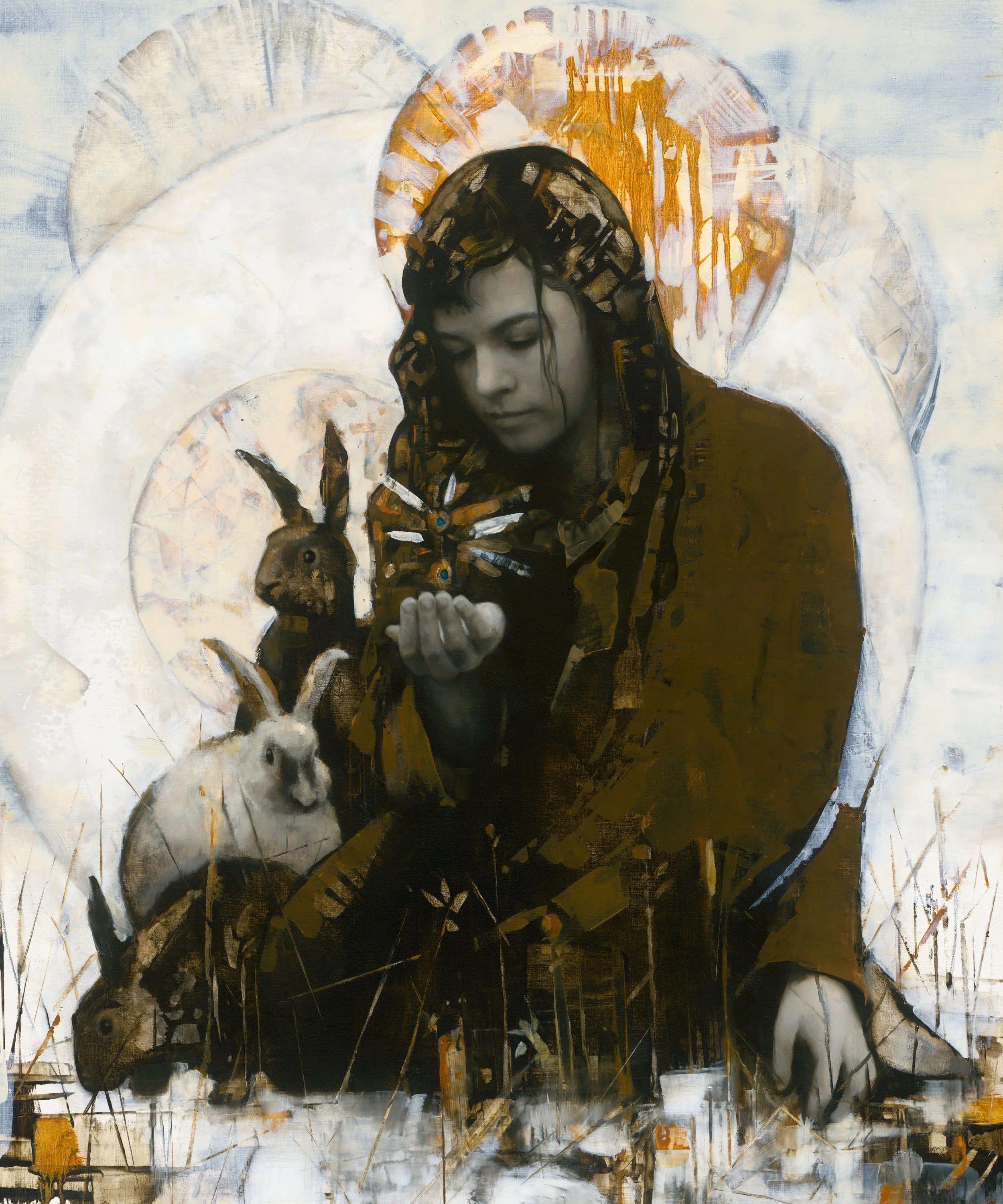
Captured with a high-resolution scan for exceptional accuracy, this oil painting is part of a small series focused on a simple, earthy palette. This limited color range emphasizes value contrast, an area I consider a strength in my work, and encourages a more symbolic interpretation than a full-color depiction. This approach is something I plan to explore further.
The painting features a tranquil, almost otherworldly figure, likely a young woman, in muted browns and whites. She gently holds a luminous, geometric object, her soft gaze fixed upon it, suggesting quiet contemplation or a mystical connection.
Three rabbits accompany her, each with a distinct presence: a dark one behind, a white one near her lap, and a brown one at her feet. These animals lend an allegorical feel, hinting at nature, vulnerability, or a symbolic relationship with the figure.
The abstract, textured background of swirling whites and pale blue creates a dreamlike atmosphere. A radiant gold halo behind her head adds a spiritual or symbolic layer. The overall impression is one of quiet beauty, inviting reflection on the figure's inner world and her connection to the glowing object and the gentle creatures around her.


Ive's Portrait Exhibition
I recently wrote a short essay about a couple paintings I conserved for the capitol.
https://capitol.michigan.gov/post/exhibit-opening---behind-the-canvas-a-fathers-presence


Archeology of Allegory
The reputation and role of allegory has fluctuated throughout its long history. It has gone from being a valuable mode of interpretation for poets and philosophers to a manipulation tool for politics and preachers. For the past two centuries, due in part to its insistence on looking backwards and reliance on historical knowledge, allegory was condemned “as aesthetic aberration or the antithesis of art”. However, in the recent past allegory has re-emerged as a viable mode of exploration. This begs the question, what has changed that has allowed allegory to re-emerge? To answer this question a brief look back at the history is required. The goal of this exploration into allegory is to reveal the stimulus for its fluctuation, as well as what makes it still relevant today.
The reputation and role of allegory has fluctuated throughout its long history. It has gone from being a valuable mode of interpretation for poets and philosophers to a manipulation tool for politics and preachers. For the past two centuries, due in part to its insistence on looking backwards and reliance on historical knowledge, allegory was condemned “as aesthetic aberration or the antithesis of art”. However, in the recent past allegory has re-emerged as a viable mode of exploration. This begs the question, what has changed that has allowed allegory to re-emerge? To answer this question a brief look back at the history is required. The goal of this exploration into allegory is to reveal the stimulus for its fluctuation, as well as what makes it still relevant today.
Follow this link to read more.
ArtPrize 2015
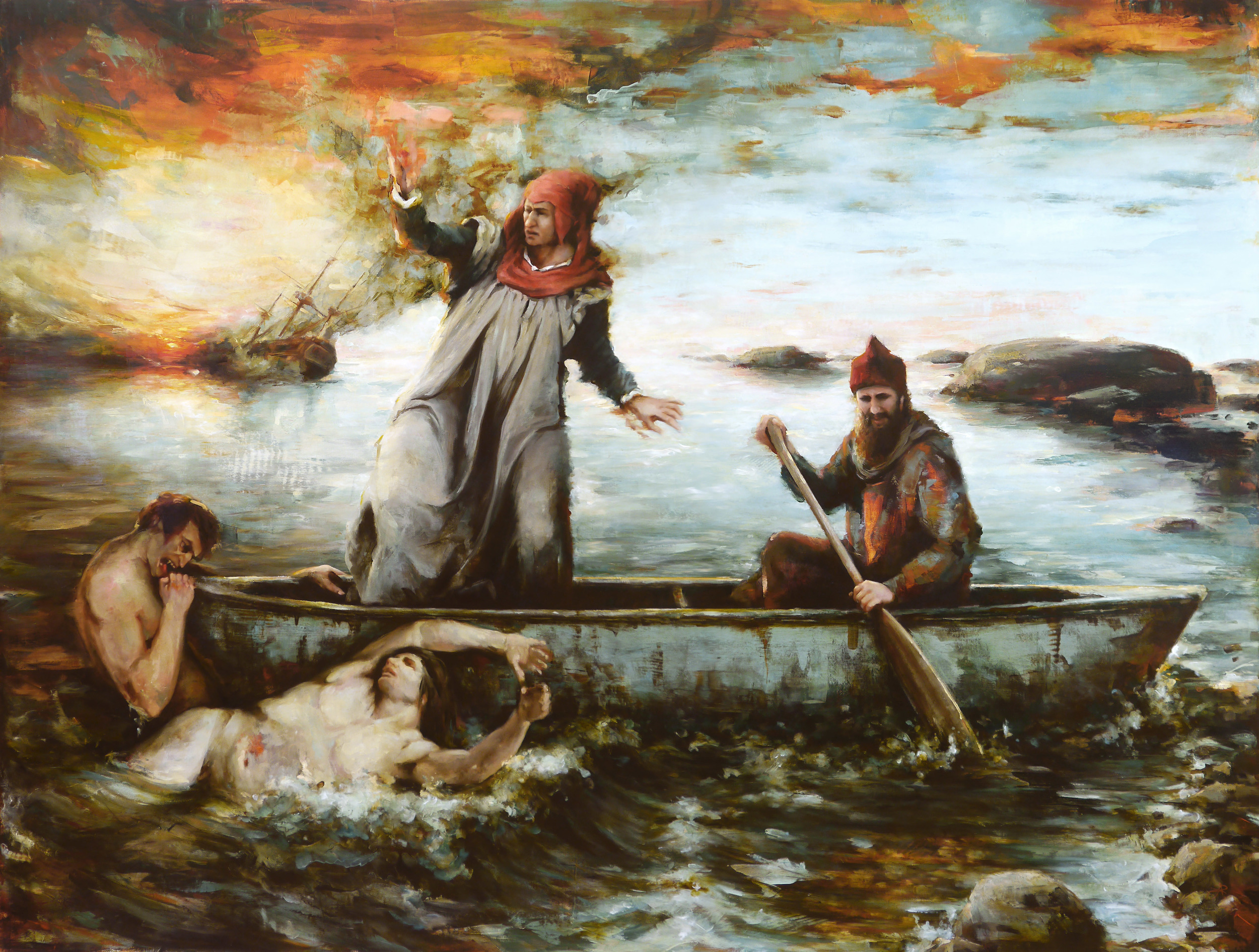
This is a 7'x5' Oil on Canvas that will be on display at Devos Convention Center During ArtPrize 7. It is about 75% done. I look forward to getting it framed up.


I think I'm done

Sojourn, Oil on Canvas, 66" x 84", 2015
I believe this painting is finally finished. I hope that Mr. Delacroix is happy with it. It will be on display for my graduate exhibition in May. For me it represents the end of one phase of a long journey and the start of a new one. And so it begins again!
"What moves those of genius, what inspires their work is not new ideas, but their obsession with the idea that what has already been said is still not enough."
Eugene Delacroix
