
Allegorical Expressionism: Naming the Unnameable
Allegorical Expressionism: Naming the Ineffable
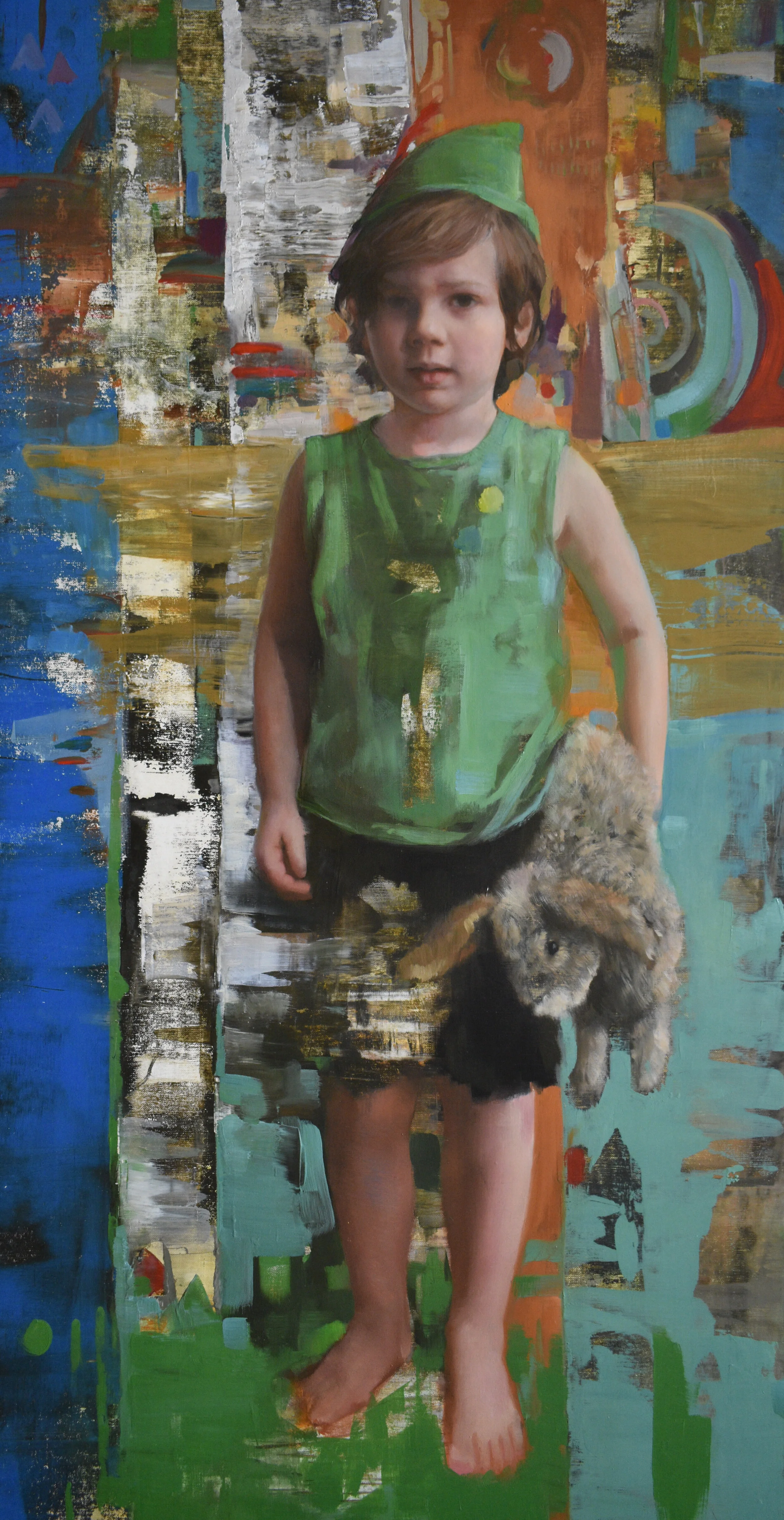
Painted by Joshua Adam Risner
I rarely start a piece knowing its true impetus; instead, I’ve found that painting is an archaeology of the unseen. For years, I struggled to find a category that fit this process, but I’ve recently come to define it as Allegorical Expressionism. This is not a marriage of disparate styles, but a singular, unified philosophy. To me, a painting is not an illustration. It is a vessel for the complexity of experience—a thing in flux that points far beyond the physical boundaries of the linen.
The Allusive Vessel
I don’t treat allegory as a closed code, a didactic puzzle, or a predetermined map. I view it as an open-ended pointing. It is a vessel that carries an idea into the viewer's space but refuses to provide a final destination. You can explore more of this specific narrative work in my Allegory gallery.
This refusal reflects the creative life itself. Because the artist is in constant flux, the work must remain fluid. The allegory is the horizon—a shifting boundary that moves with the artist and the viewer. At its best, it is a state of becoming rather than static knowing. I’m not suggesting that knowledge is purely subjective, but rather that truth is so vast it has the capacity to grow along with us.
Thinking out Loud

Painted by Joshua Adam Risner
If the allegory is the horizon, Expressionism is the grit of the navigation. It is the "raw working it out" on the canvas—a metabolic process where content and material collide. This isn't about stylistic distortion; it is the visible record of the struggle to manifest an idea. Not every artist works this way. Allegorical Expressionism is for those of us who think out loud.
My technique is eclectic by necessity. I operate under a mandate: by whatever means necessary. I am not tethered to a single school or a rigid tradition. I will use a 19th-century glaze alongside a squeegee or sandpaper if that’s what the content demands. The "expression" is the friction of the search—the map-making that happens in the heat of the process. It is the act of throwing paint onto a surface to reflect, analyze, and react.
The Pursuit Beyond the Paint
Tonalism is the philosophical connective tissue here. It’s more than a technique of soft edges; it is a pursuit of content that exists beyond the paint. I invite you to see how this atmosphere takes form in my Tonalist Gallery. The atmospheric "haze" is the physical manifestation of the allusion. It is the space where the literal ends and the infinite begins—where the moving of time is transmitted through a static art.
An Allegorical Expressionist painting is never a static object. It is alive. It is the trace of an artist using every tool in his arsenal to build a bridge toward the ineffable.
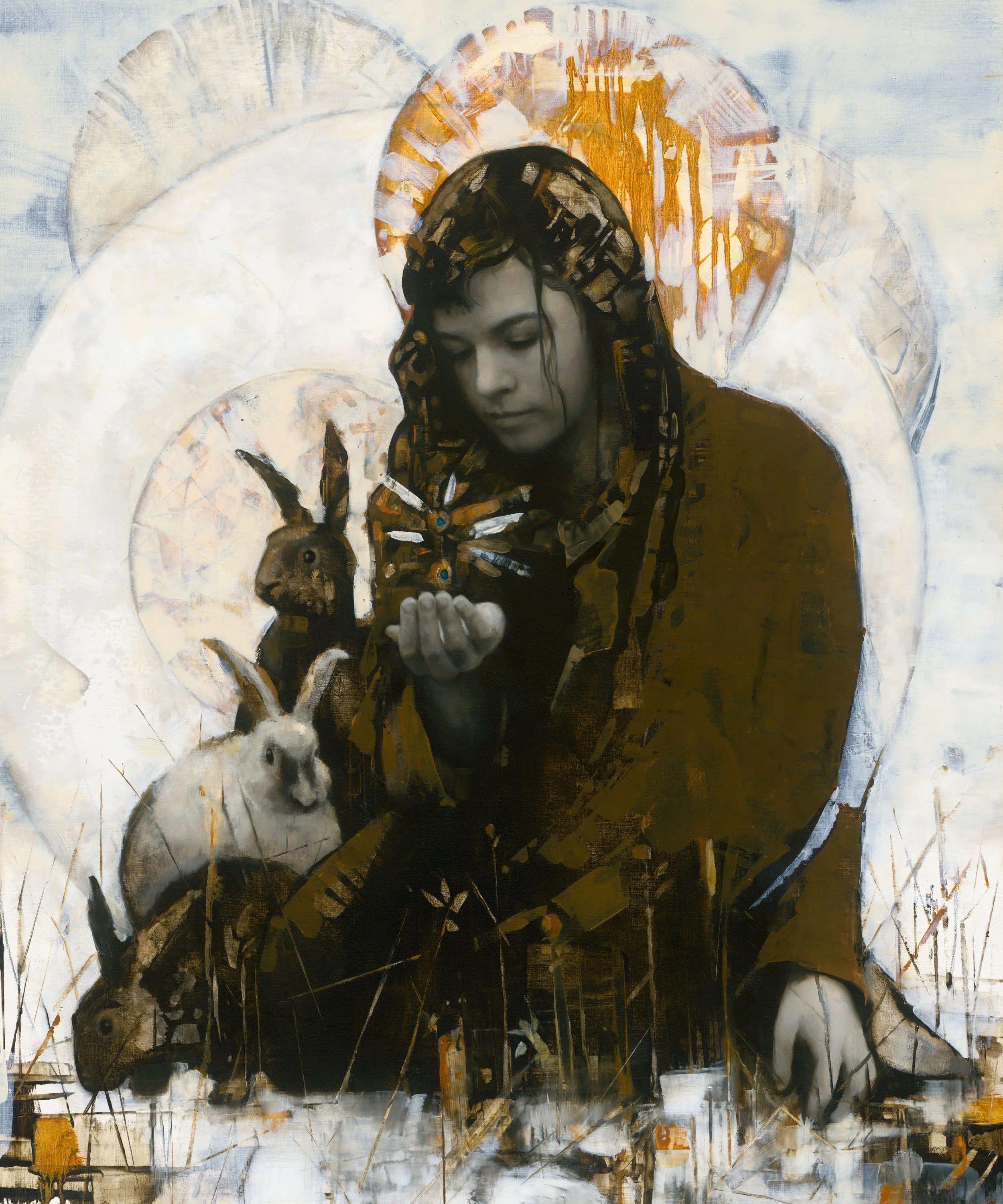
Painted by Joshua Adam Risner
I am documenting a life in motion, using the canvas to point toward a truth that is always "more than what it was the moment before."
The allegory is the what; the expressionism is the how.
This archaeology, however, is not a passive process. It requires what Rowan Williams describes as the "labor of attention."
To stand before the ineffable long enough to translate it into paint requires a specific kind of endurance—a willingness to stay present even when the subject refuses to sit still. In the coming weeks, I’ll be sharing how Williams’ ideas on attention have begun to ground my time at the easel. We’ll look at how the "labor" of the search is more than just technique; it is a way of honoring the world by refusing to look away.
The allegory is the what; the expressionism is the how. But the attention—that is the why.