
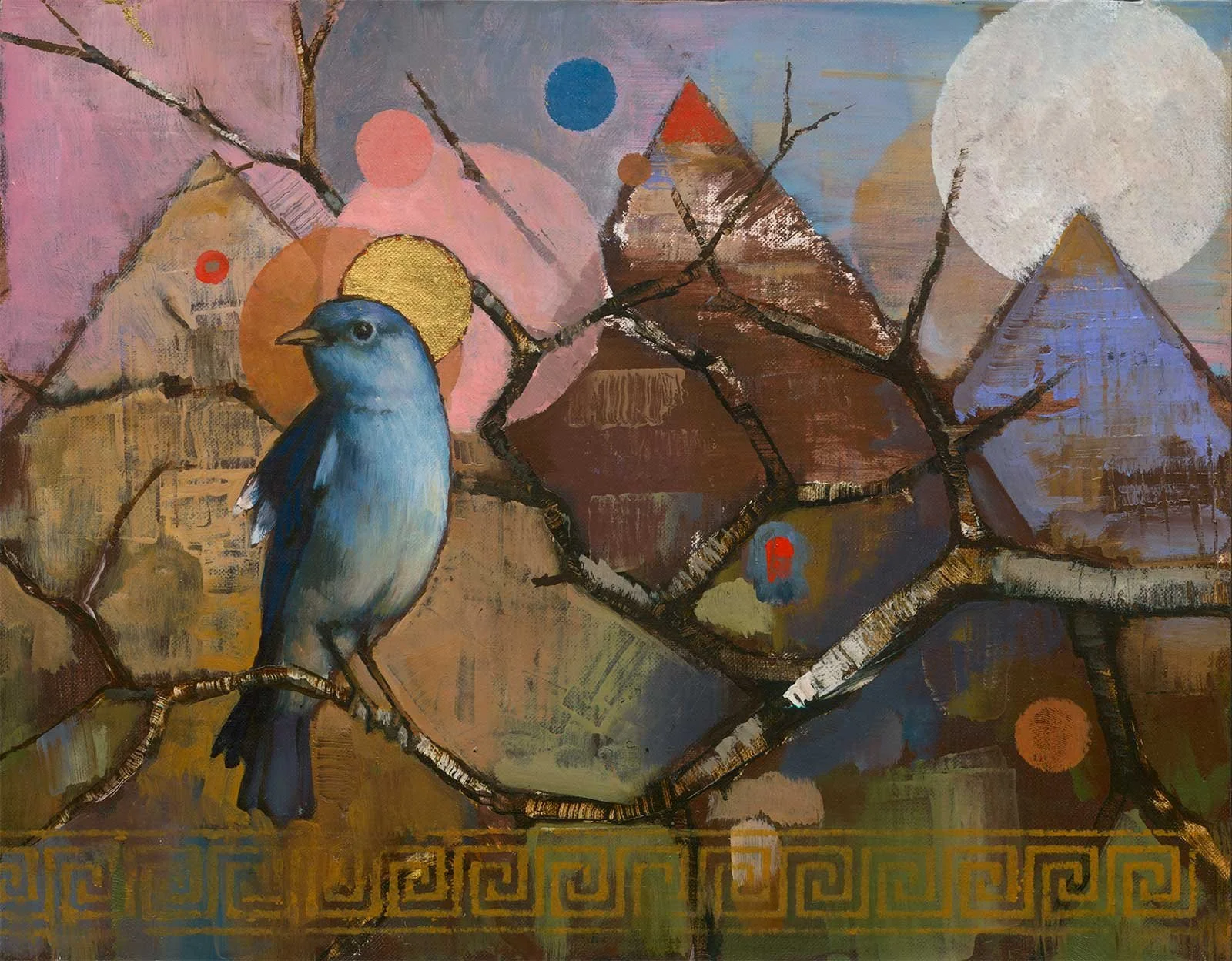
Why Every Artist Needs Their “Bird Painting”
It’s hard to hit the mark when the mark is elusive. For artist Joshua Adam Risner, 'bird paintings' are a necessary respite—a space where precision falls away and the artist can finally breathe. Discover why every creator needs a 'corner painting' to balance the weight of expectation with the need to stay in the moment.
Balancing the unknown expectations of a professional artist.
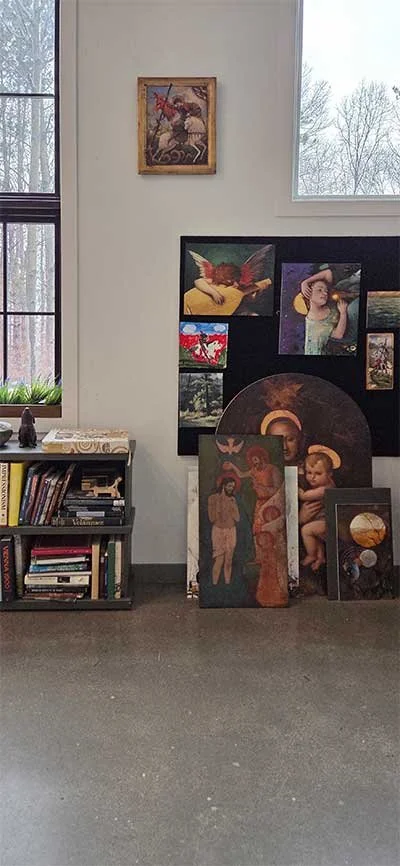
In the studio: Rabbit Hill
As an artist, the public often sees the finished product—the polished, confident strokes of a commission or the calculated precision of a gallery piece. What they don’t see is the weight behind the brush. There is a silent, heavy expectation that follows every professional artist: the expectations of clients, the critiques of peers, and the often suffocating standards we set for ourselves. It’s hard to hit the mark when the mark is elusive.
Even when an artist appears completely confident, the reality is that no one is truly fearless when they know they are about to put themselves on display in the form of a painting for all to see—the good, the bad, and the mediocre. Most of the time, I find that I am harder on myself than any client could ever be. To survive that pressure, I paint birds.
The Respite of the Perch
For me, a bird painting represents a respite. It is a space where the demand for precision falls away. When I am working on a bird, I am not answering to a brief or a deadline; I am breathing. It is a time to truly play with color, form, and texture—pushing palettes further than a client might allow and letting the paint be thick, messy, or ethereal just for the sake of the medium.

Detail: Respite in Color
The Connection to Icons
I’ve found a surprising parallel between these birds and the tradition of icon painting. In iconography, the burden of "originality" is removed. You aren't trying to reinvent the wheel; you are staying true to an essence. Precision in an icon isn't about technical perfection for the sake of ego—it’s about devotion and staying true to the spirit of the subject.
My bird paintings function the same way. They don’t need to be groundbreaking; they just need to be true.
The "Corner" Painting
"We need the high-stakes work to grow, but we need the quiet work to stay in the moment."
I believe every painter needs their version of a bird painting—something that can sit in the corner of the studio for months. It doesn't demand to be finished. It waits patiently until you figure out exactly what it needs. While the challenges of client expectations and peer reviews are vital for our growth—pushing us to reach heights we wouldn't scale on our own—they must be balanced.
Without the bird paintings, that self-criticism can become deafening. The "bird" allows for a calm and patient cadence. It’s a reminder that art can be a conversation with yourself rather than a performance for others.
We need the high-stakes work to grow, but we need the quiet work to stay in the moment.
So, if you’re a creator feeling the weight of the display, find your bird. Let it sit in the corner. Let it be the place where you simply breathe.
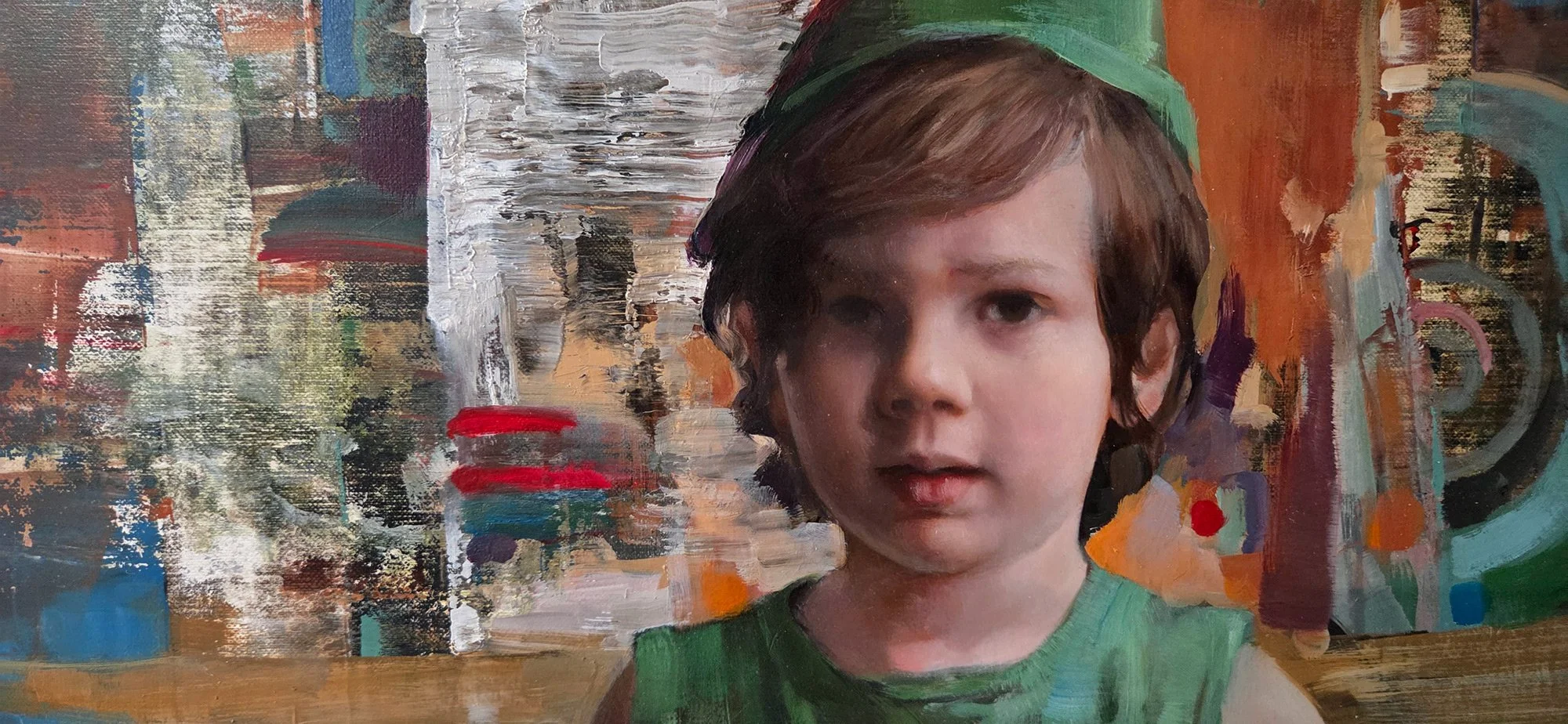
Allegorical Expressionism: Naming the Unnameable
In my studio, painting is an archaeology of the unseen. For years, I struggled to find a category for this process until I defined it as Allegorical Expressionism: a singular philosophy where a painting is not an illustration, but a vessel in flux pointing far beyond the linen. Explore the friction of the search and the pursuit of truth that grows with the artist.
Allegorical Expressionism: Naming the Ineffable
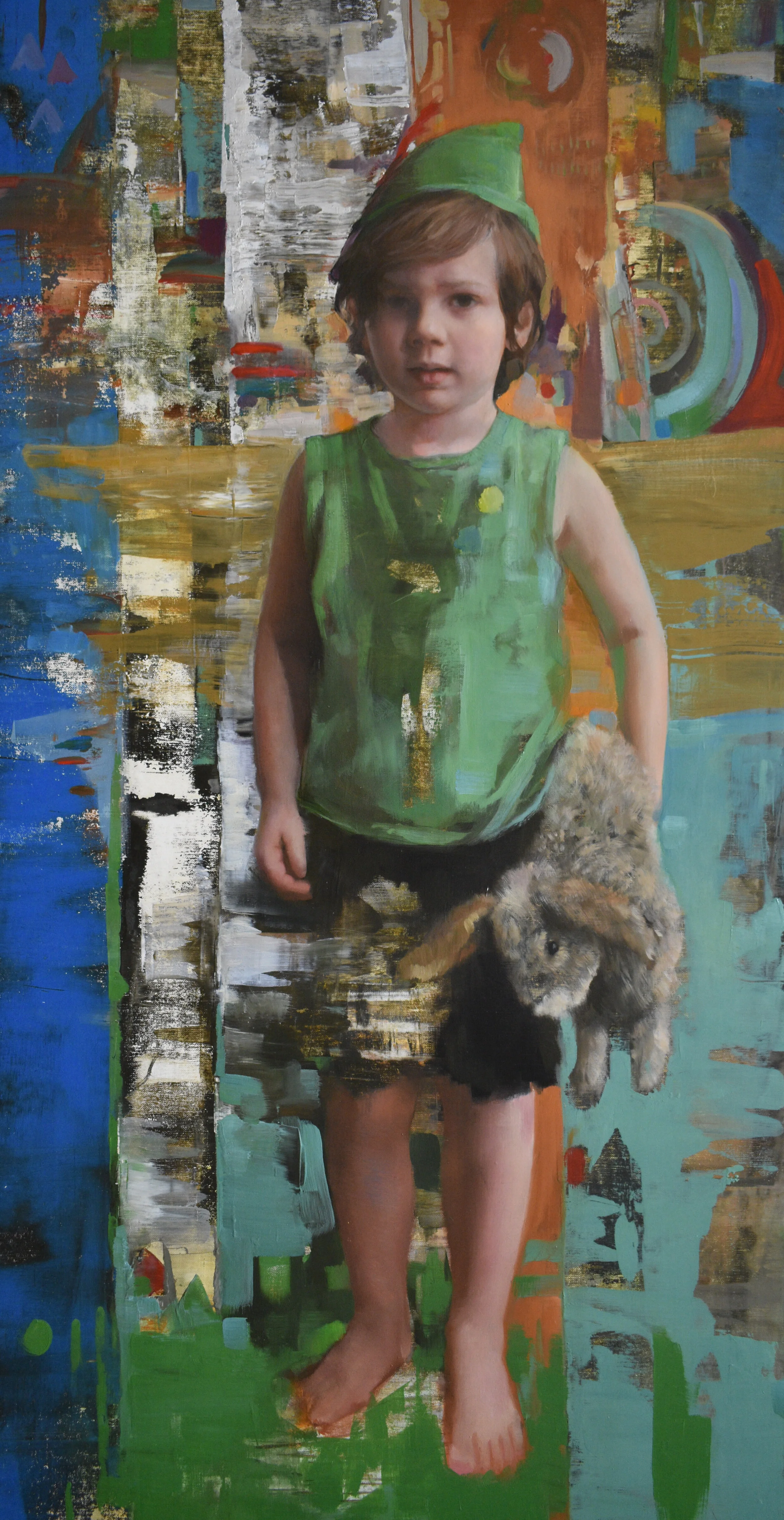
Painted by Joshua Adam Risner
I rarely start a piece knowing its true impetus; instead, I’ve found that painting is an archaeology of the unseen. For years, I struggled to find a category that fit this process, but I’ve recently come to define it as Allegorical Expressionism. This is not a marriage of disparate styles, but a singular, unified philosophy. To me, a painting is not an illustration. It is a vessel for the complexity of experience—a thing in flux that points far beyond the physical boundaries of the linen.
The Allusive Vessel
I don’t treat allegory as a closed code, a didactic puzzle, or a predetermined map. I view it as an open-ended pointing. It is a vessel that carries an idea into the viewer's space but refuses to provide a final destination. You can explore more of this specific narrative work in my Allegory gallery.
This refusal reflects the creative life itself. Because the artist is in constant flux, the work must remain fluid. The allegory is the horizon—a shifting boundary that moves with the artist and the viewer. At its best, it is a state of becoming rather than static knowing. I’m not suggesting that knowledge is purely subjective, but rather that truth is so vast it has the capacity to grow along with us.
Thinking out Loud
Painted by Joshua Adam Risner
If the allegory is the horizon, Expressionism is the grit of the navigation. It is the "raw working it out" on the canvas—a metabolic process where content and material collide. This isn't about stylistic distortion; it is the visible record of the struggle to manifest an idea. Not every artist works this way. Allegorical Expressionism is for those of us who think out loud.
My technique is eclectic by necessity. I operate under a mandate: by whatever means necessary. I am not tethered to a single school or a rigid tradition. I will use a 19th-century glaze alongside a squeegee or sandpaper if that’s what the content demands. The "expression" is the friction of the search—the map-making that happens in the heat of the process. It is the act of throwing paint onto a surface to reflect, analyze, and react.
The Pursuit Beyond the Paint
Tonalism is the philosophical connective tissue here. It’s more than a technique of soft edges; it is a pursuit of content that exists beyond the paint. I invite you to see how this atmosphere takes form in my Tonalist Gallery. The atmospheric "haze" is the physical manifestation of the allusion. It is the space where the literal ends and the infinite begins—where the moving of time is transmitted through a static art.
An Allegorical Expressionist painting is never a static object. It is alive. It is the trace of an artist using every tool in his arsenal to build a bridge toward the ineffable.
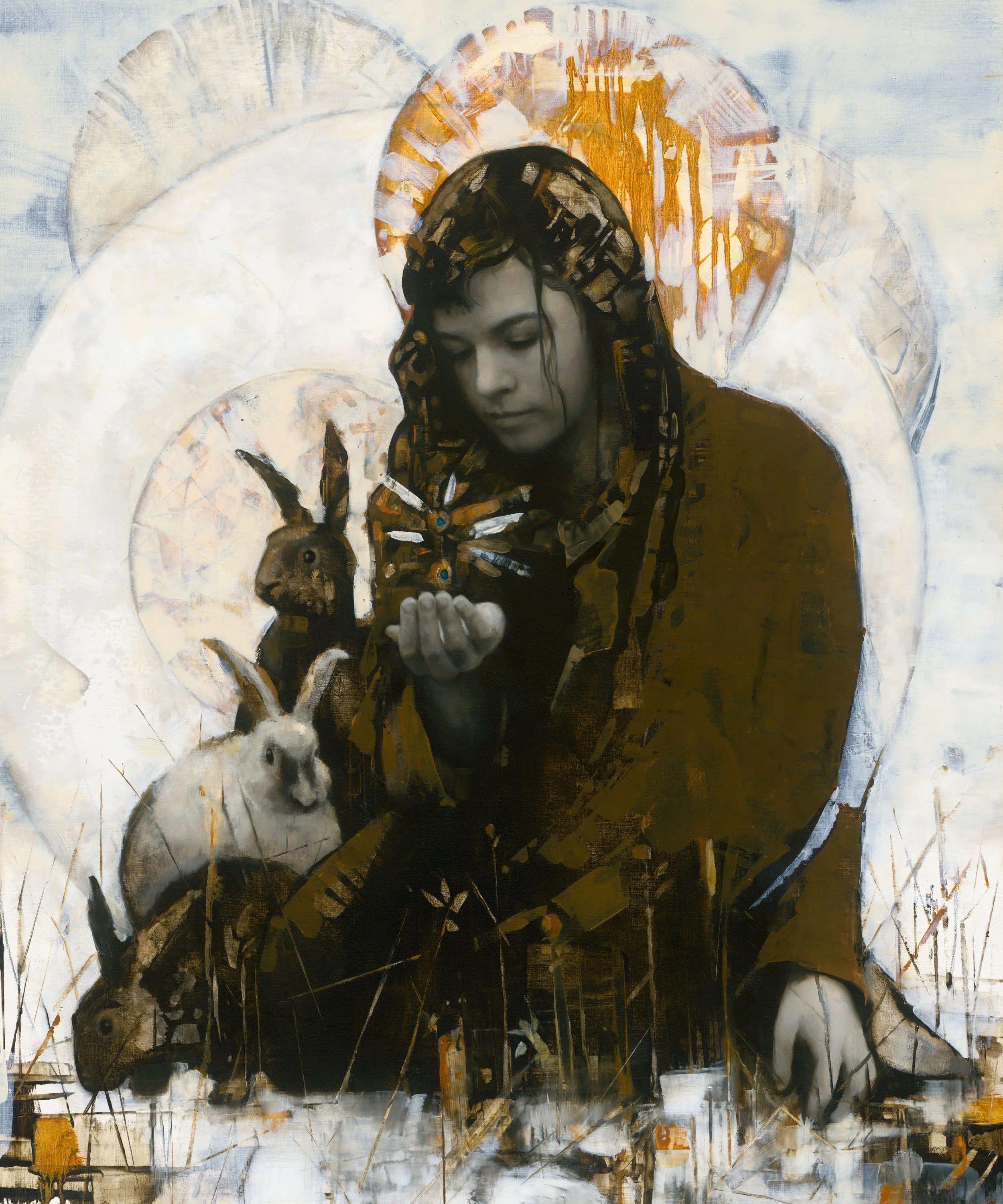
Painted by Joshua Adam Risner
I am documenting a life in motion, using the canvas to point toward a truth that is always "more than what it was the moment before."
The allegory is the what; the expressionism is the how.
This archaeology, however, is not a passive process. It requires what Rowan Williams describes as the "labor of attention."
To stand before the ineffable long enough to translate it into paint requires a specific kind of endurance—a willingness to stay present even when the subject refuses to sit still. In the coming weeks, I’ll be sharing how Williams’ ideas on attention have begun to ground my time at the easel. We’ll look at how the "labor" of the search is more than just technique; it is a way of honoring the world by refusing to look away.
The allegory is the what; the expressionism is the how. But the attention—that is the why.
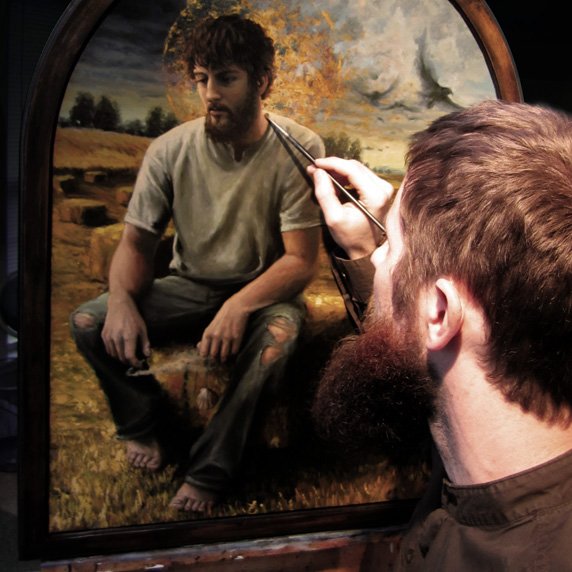
The Living Legacy: Commissioning a Master Oil Portrait
A portrait is more than a likeness; it is a synthesis of a life lived. Discover the philosophy of the "Living Presence" and the museum-grade process behind commissioning a master oil portrait at Rabbit Hill Art Studio—where 19th-century Tonalist tradition meets a modern legacy.
The Living Legacy:
Commissioning a Master Oil Portrait
By Joshua Adam Risner
For centuries, the oil portrait has served as the ultimate medium for preserving a legacy. It is more than a mere likeness; it is a "living presence" captured on canvas.
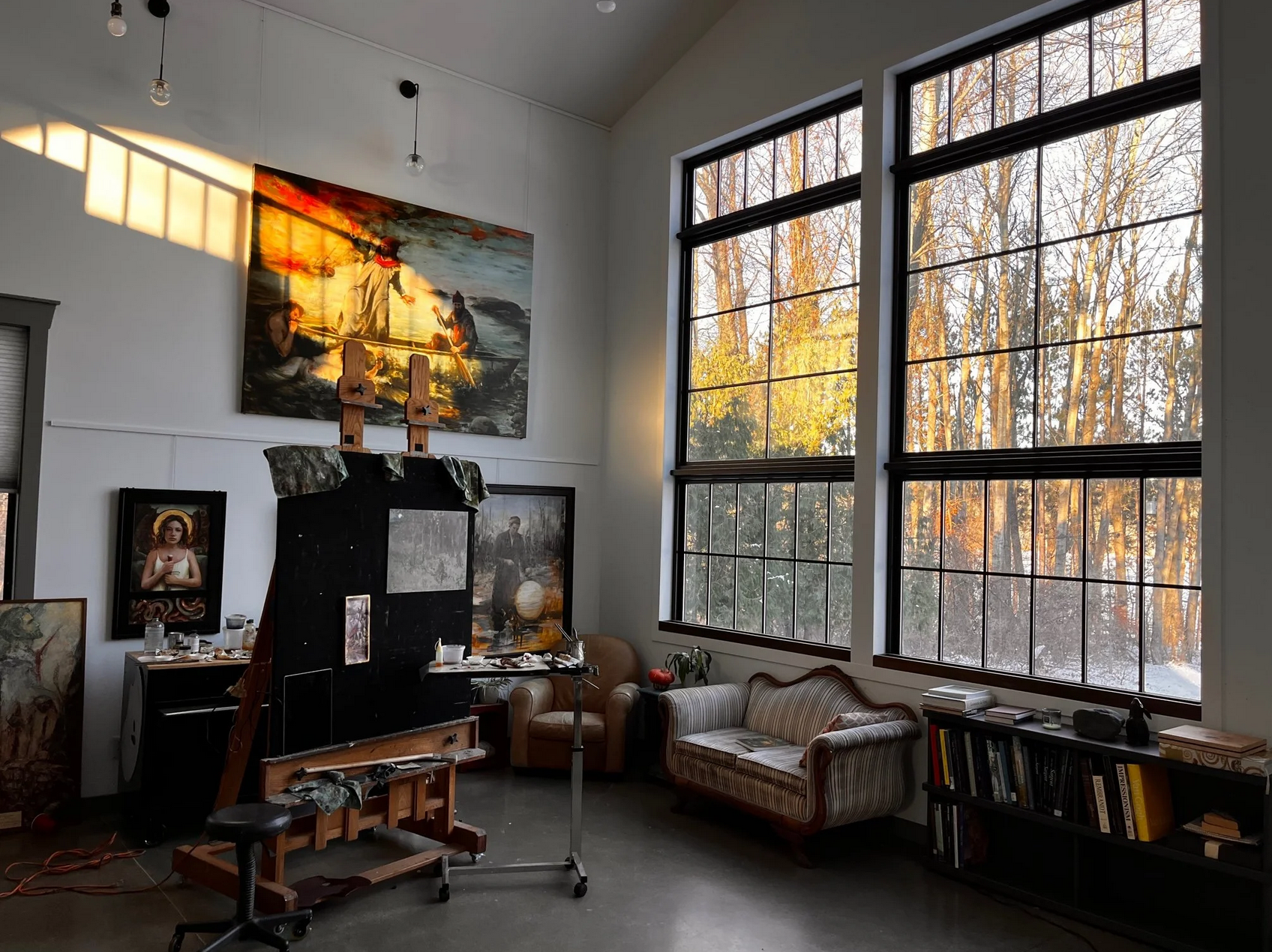
Rabbit Hill Art Studio: Where traditional craftsmanship meets contemporary legacy.
At Rabbit Hill Art Studio, my work is dedicated to this tradition—creating masterworks that serve as a bridge between the present and the future. Whether for an executive, a family, or a private collector, a commission is a collaborative journey into the heart of a subject's character. It is an investment in an heirloom that carries the weight of a lifetime, crafted with the same rigor and archival standards found in the world’s most respected galleries.
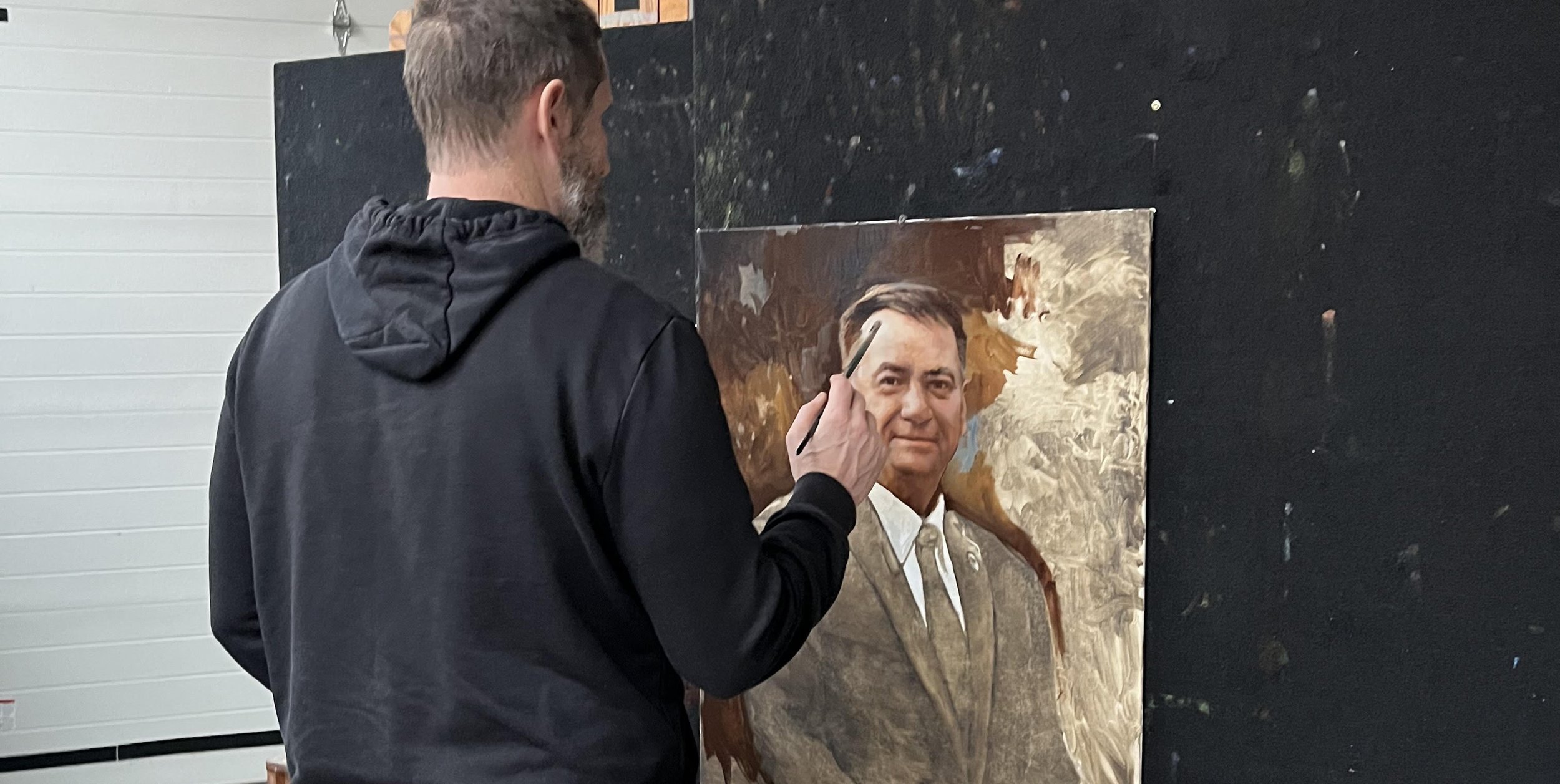
The work in progress: Translating personality through technical rigor.
Beyond the Snapshot
In an age of instant digital imagery, the hand-painted portrait stands apart because it offers something a camera cannot: duration. A photograph captures a millisecond; a painting synthesizes hours of observation, thought, and artistic translation. My goal is for every portrait to possess a quiet confidence that speaks to future generations.
Whether we work through traditional live sittings or through photographic reference, the objective remains identical: to find the "inner architecture" of the face. Whether it is photographs or sittings, the goal is the same—to capture the essence of the personality. I prefer to work from life whenever possible, as it allows for a unique spirit and nuance that only a face-to-face interaction can reveal, but the "Living Presence" is always the true north of the project.
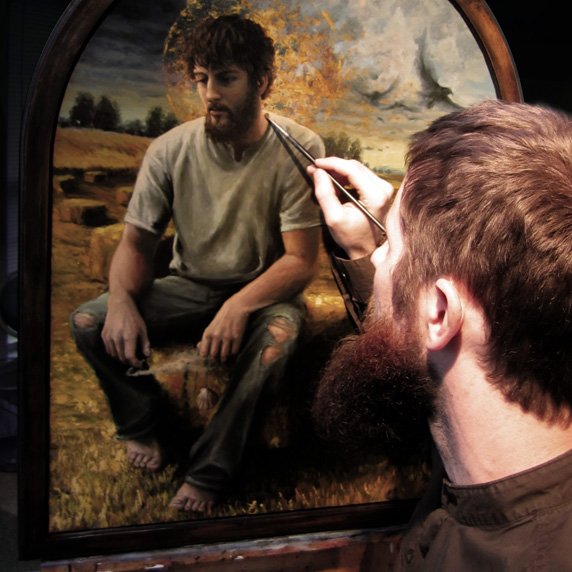
The artist at work: Synthesizing the subject's essence with traditional craftsmanship.
A Museum-Grade Process
Commissioning a portrait at Rabbit Hill means investing in archival excellence. Inspired by the 19th-century Tonalists like George Inness, I focus on the atmospheric quality of light and a harmonious palette. This creates a psychological space that the viewer can actually inhabit.
To ensure these works survive as family treasures for centuries, I employ conservation-standard methods in every stage of production. I often mix my own oil paints and hand-craft frames to ensure the entire piece—from the pigment to the wood—is an heirloom-quality object. We aren't just making a record of what you look like; we are creating a piece of fine art that breathes.
Securing Your Place in History
I am currently accepting inquiries for private, corporate, and institutional commissions. The process begins with a conversation about the subject, the setting, and the story you wish to tell. If you are looking for a high-quality artist in Michigan to translate a life lived into a work of art, I invite you to reach out.
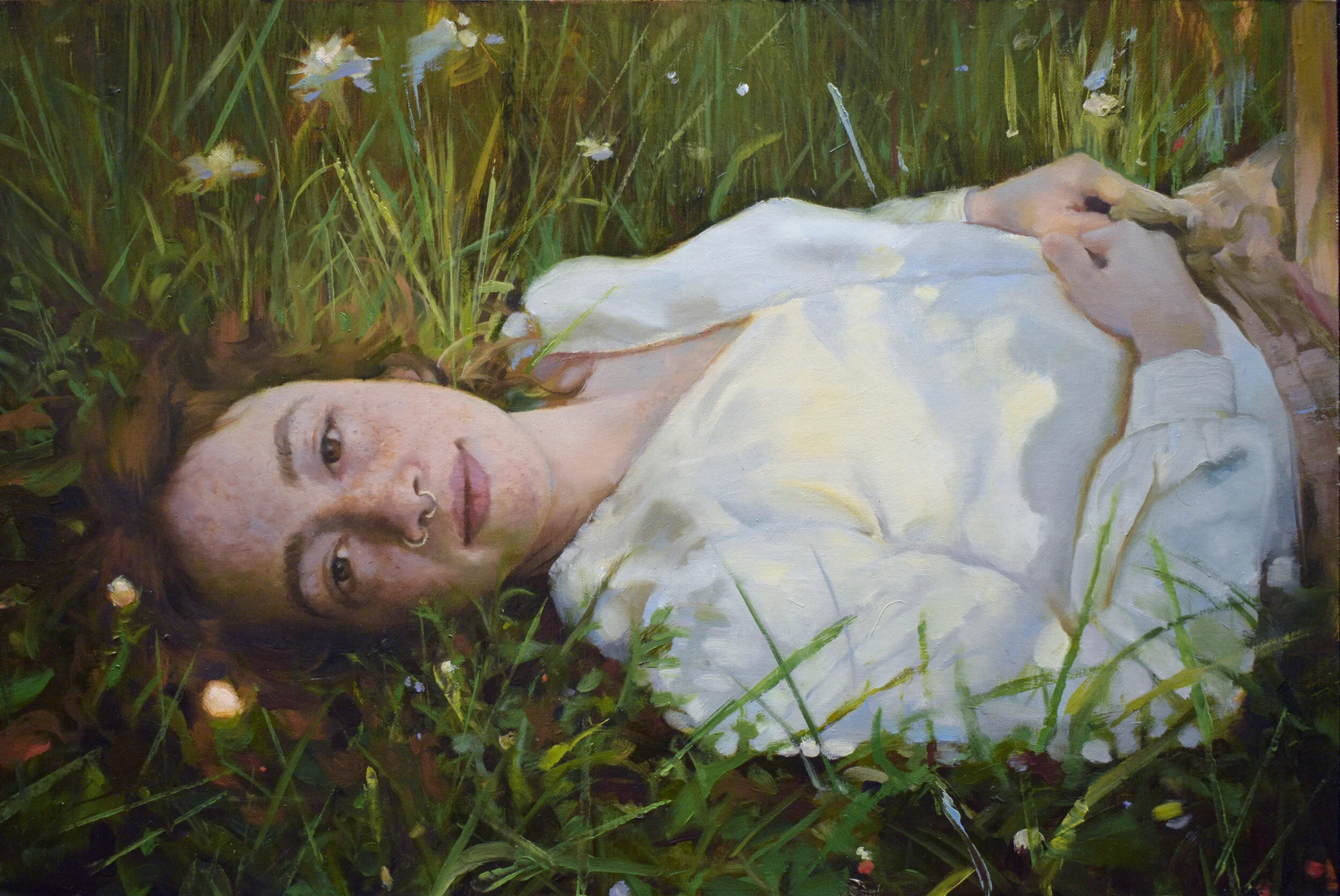
The Living Presence: To Smile or Not to Smile?
In our 'Say Cheese' culture, we’ve been conditioned to believe that a smile is the truest version of ourselves. But for a portrait artist, the goal isn't to capture a reflex—it's to manifest a Living Presence. Explore why the potential for a smile is more powerful than the grin itself, and how the philosophies of Tonalism and Cubism allow a painting to breathe in a way photography never can.
Why I Might Ask You Not to "Cheese"
By Joshua Adam Risner
We live in a "Say Cheese" culture. The second a camera comes out, most of us have a practiced reflex—a quick, muscular "on" switch where we show our teeth and signal to the world that we’re doing just fine. It’s a great tool for a holiday card, but for a painted portrait, we’re looking for something deeper. We’re looking for what I call a Living Presence.
When you look at a great historical portrait, you’ll notice that people rarely grinned. It wasn’t because they were miserable; it was because they understood that a portrait is a long-term investment in a person’s legacy.
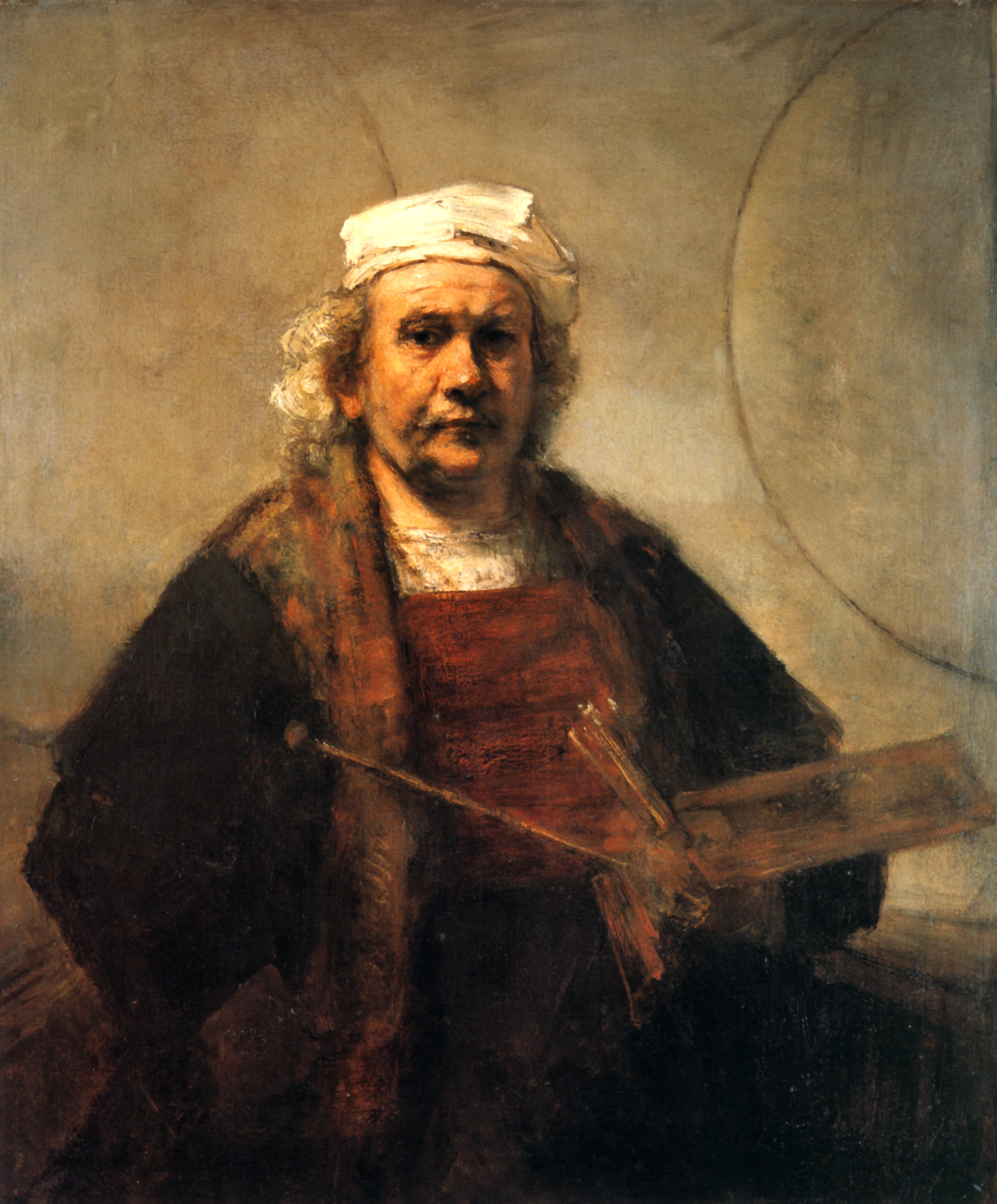
Rembrandt’s Self-Portrait: A gaze that holds the weight of a lifetime.
The Architecture of a Thought
A smile is a fleeting event—it lasts a second and then it’s gone. To freeze that one-second grin in oil can actually flatten a person, reducing a complex human being to a single, static impulse. When your mouth is closed and your expression is neutral, there is a potential for a smile. It creates a bit of a mystery. Because you aren’t telling the viewer exactly how to feel, they have to work a little harder. They start to wonder: What is he thinking about? Who is she, really? That tension is what makes a painting a conversation that lasts for generations. The reason it lasts is because the viewer can bring a bit of themselves to the experience. A smile says it all; a neutral gaze asks a question.

John Singer Sargent’s Lady Agnew: Caught in a living motion.
A Moment That Captures Many Moments
There’s a big difference between a lens and a brush. A camera captures a millisecond. A painting captures a duration. We all know we look different in every photo, but a painting needs to look like all the photos. It needs to speak to the whole of what you look like. The essence.
I often think about the "Simultaneity" found in Cubism. Even though I paint realistically, the spirit of my process is similar. The way Picasso tried to paint the essence of three-dimensional form on a two-dimensional canvas is the same way I try to paint a 3D personality on a 2D canvas. A portrait isn't just "you at 2:00 PM on a Tuesday." It’s a synthesis of your past, present, and future. When we move past the performance of a smile, we find the "inner architecture" of the face—the part of you that exists when no one is watching. The result is a face that doesn't feel "frozen." It feels like it is continuously happening.

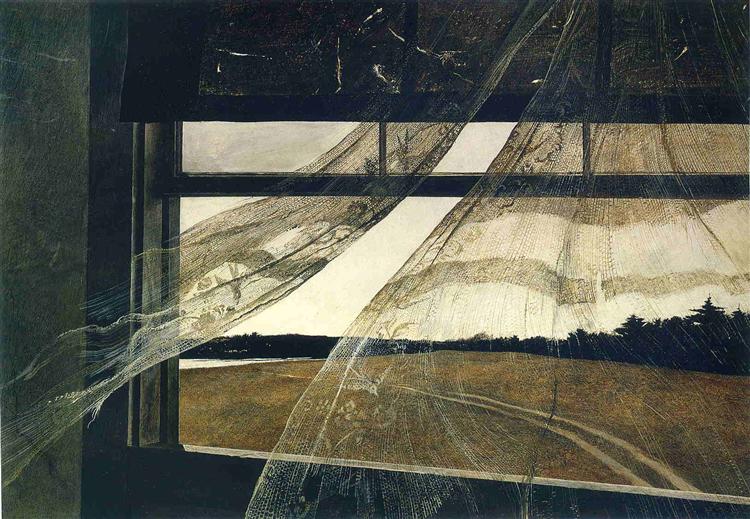
Inness and Wyeth: Capturing the "vapor" of a scene and the passage of time.
The "Atmosphere" of the Soul
I’ve always been inspired by the Tonalist painters, like George Inness. They didn’t just want to paint a static field; they wanted to paint a "living motion." They wanted to capture what it was like to be in the landscape, not just a picture of a moment. I try to bring that same "motion" into my portraits. A serious face isn't "grumpy" or sad—it has gravitas. It suggests a person governed by quiet strength and reason. It suggests something happened before and something will happen after.
Andrew Wyeth understood this perfectly; his work captures a profound, heavy stillness that feels alive because it captures the quiet passage of time. He doesn't just paint a face; he paints the air around the person. This creates a psychological space that the viewer can actually inhabit.
The Portrait as a Chord
If a snapshot is a single note, a portrait with a Living Presence is a chord. It takes multiple notes—different moods, moments, and perspectives—all struck at the exact same time to create a harmony that feels truly human.
When you sit for a portrait with me, my goal is to help that performance drop. We aren't just making a record of what you want to look like, or what you think you look like; we’re creating an experience of who you are. It’s an image that doesn't just sit on the wall—it breathes. It’s a life lived.
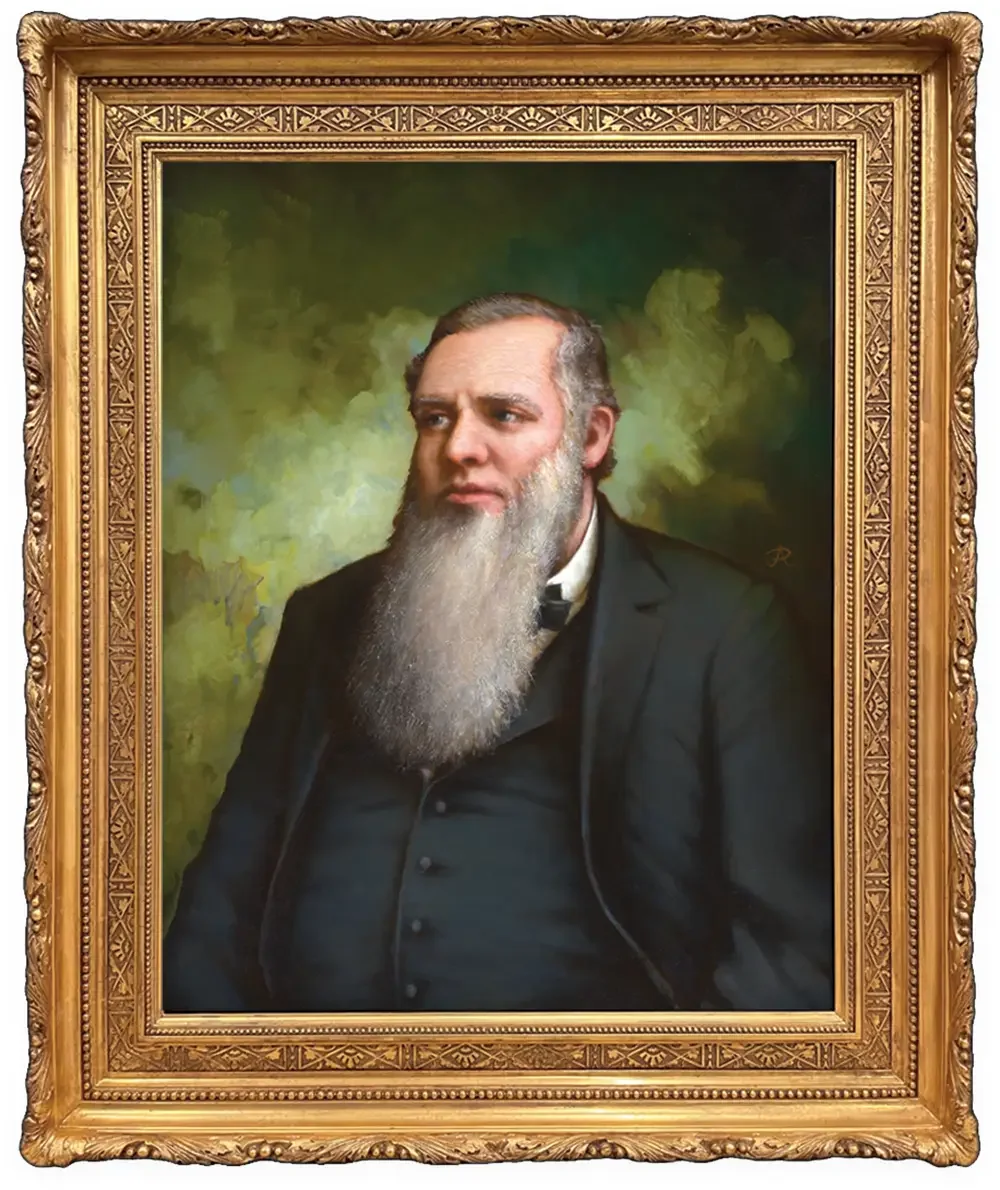
Painting History: My New Portrait of Governor John Bagley
"While the Capitol houses dozens of portraits, its newest addition honors a legacy from the 1870s. Joshua Risner, the Capitol’s artist-in-residence, recently completed a new portrait of Governor John Bagley, who led the state during the transition from a wooden structure to the iconic building we know today. The project required a deep dive into historical records to ensure that Bagley’s likeness and the era's gravitas were perfectly preserved for future generations."
I’m thrilled to finally share a project that has been a true labor of love and history. As the artist-in-residence for the Michigan State Capitol, I recently had the honor of painting a new portrait of Governor John Bagley—the man who actually oversaw the construction of the building where my work now hangs. It was a unique challenge to capture the spirit of a leader from 150 years ago, and I’m proud to see him finally take his rightful place among his peers in the Capitol collection.