
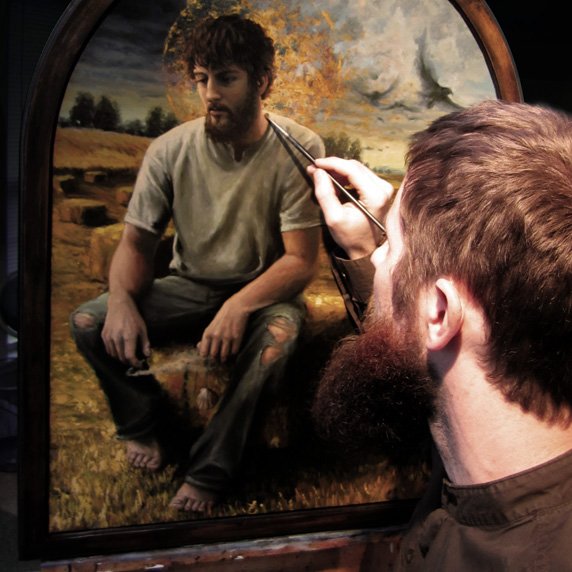
The Living Legacy: Commissioning a Master Oil Portrait
A portrait is more than a likeness; it is a synthesis of a life lived. Discover the philosophy of the "Living Presence" and the museum-grade process behind commissioning a master oil portrait at Rabbit Hill Art Studio—where 19th-century Tonalist tradition meets a modern legacy.
The Living Legacy:
Commissioning a Master Oil Portrait
By Joshua Adam Risner
For centuries, the oil portrait has served as the ultimate medium for preserving a legacy. It is more than a mere likeness; it is a "living presence" captured on canvas.
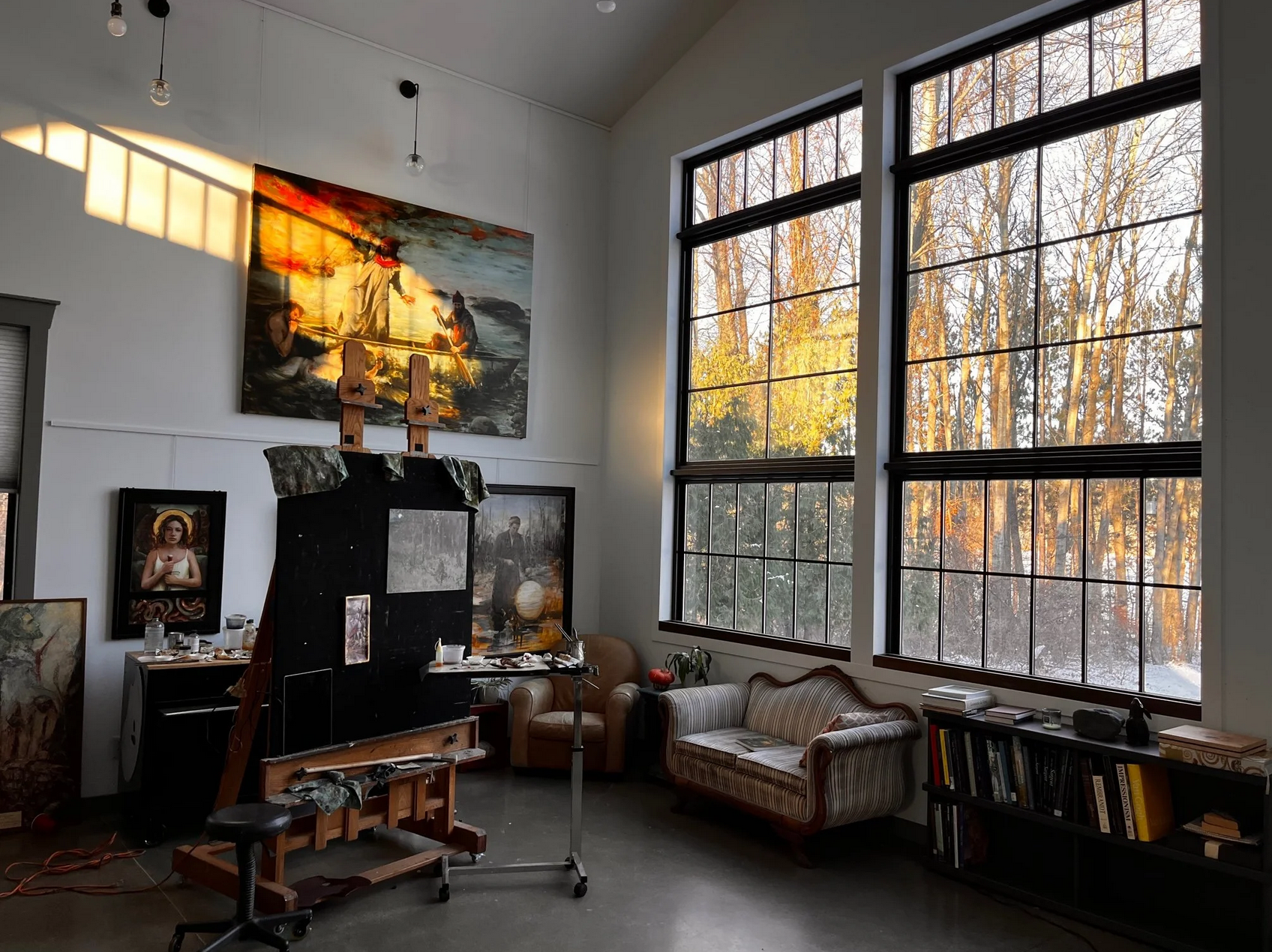
Rabbit Hill Art Studio: Where traditional craftsmanship meets contemporary legacy.
At Rabbit Hill Art Studio, my work is dedicated to this tradition—creating masterworks that serve as a bridge between the present and the future. Whether for an executive, a family, or a private collector, a commission is a collaborative journey into the heart of a subject's character. It is an investment in an heirloom that carries the weight of a lifetime, crafted with the same rigor and archival standards found in the world’s most respected galleries.
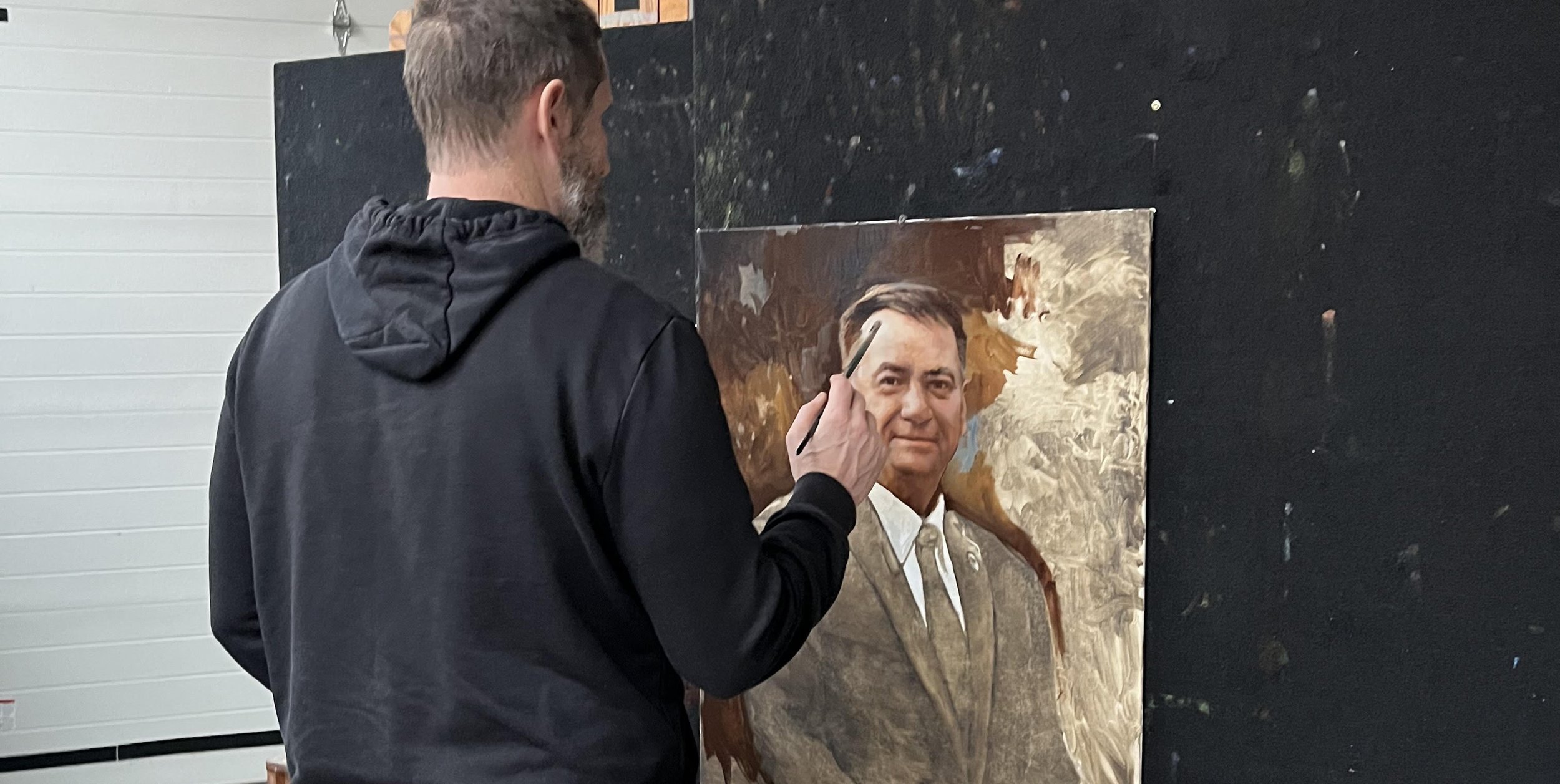
The work in progress: Translating personality through technical rigor.
Beyond the Snapshot
In an age of instant digital imagery, the hand-painted portrait stands apart because it offers something a camera cannot: duration. A photograph captures a millisecond; a painting synthesizes hours of observation, thought, and artistic translation. My goal is for every portrait to possess a quiet confidence that speaks to future generations.
Whether we work through traditional live sittings or through photographic reference, the objective remains identical: to find the "inner architecture" of the face. Whether it is photographs or sittings, the goal is the same—to capture the essence of the personality. I prefer to work from life whenever possible, as it allows for a unique spirit and nuance that only a face-to-face interaction can reveal, but the "Living Presence" is always the true north of the project.
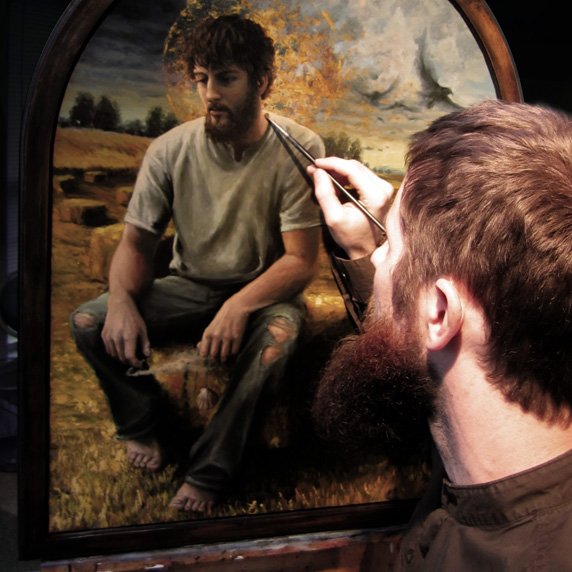
The artist at work: Synthesizing the subject's essence with traditional craftsmanship.
A Museum-Grade Process
Commissioning a portrait at Rabbit Hill means investing in archival excellence. Inspired by the 19th-century Tonalists like George Inness, I focus on the atmospheric quality of light and a harmonious palette. This creates a psychological space that the viewer can actually inhabit.
To ensure these works survive as family treasures for centuries, I employ conservation-standard methods in every stage of production. I often mix my own oil paints and hand-craft frames to ensure the entire piece—from the pigment to the wood—is an heirloom-quality object. We aren't just making a record of what you look like; we are creating a piece of fine art that breathes.
Securing Your Place in History
I am currently accepting inquiries for private, corporate, and institutional commissions. The process begins with a conversation about the subject, the setting, and the story you wish to tell. If you are looking for a high-quality artist in Michigan to translate a life lived into a work of art, I invite you to reach out.
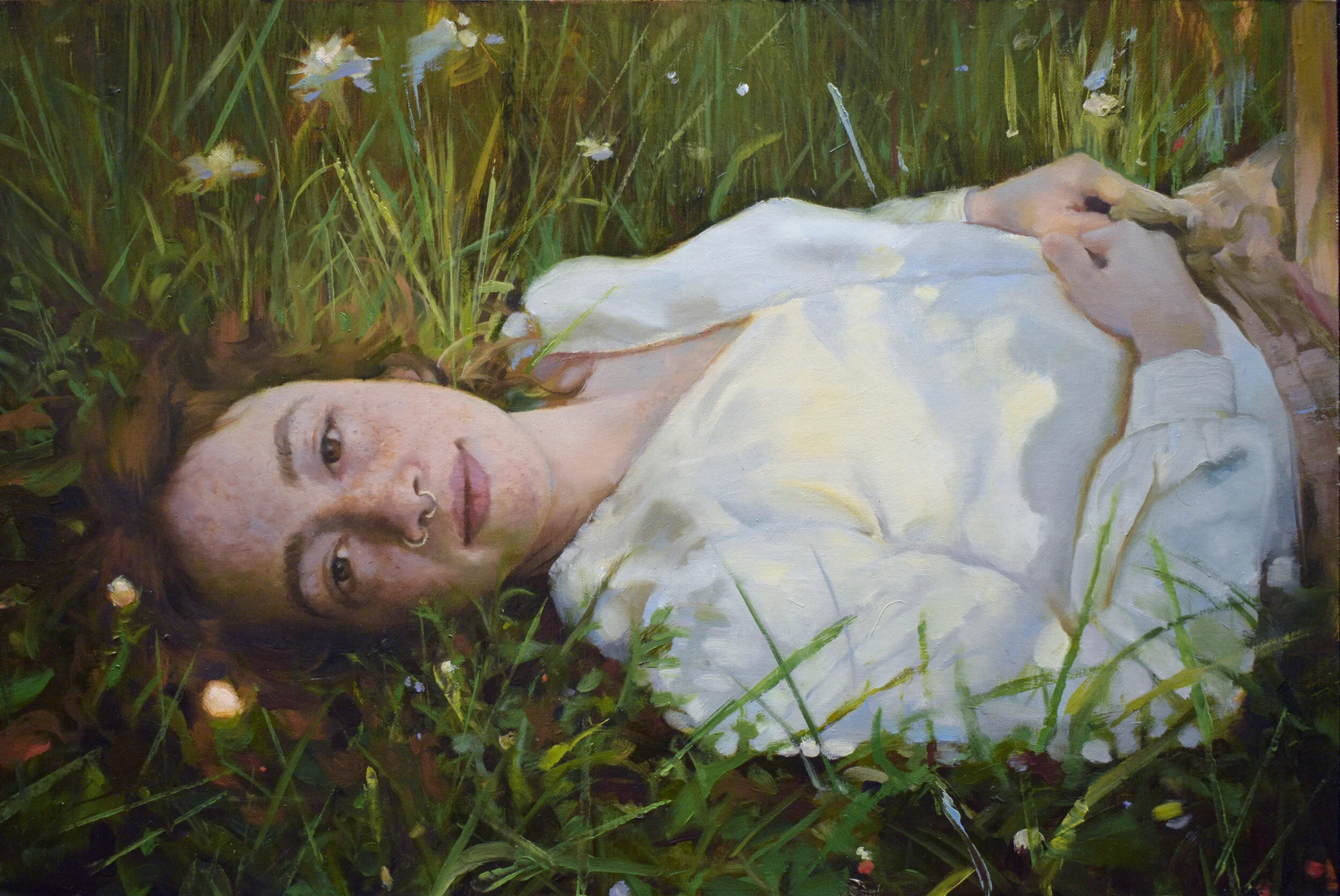
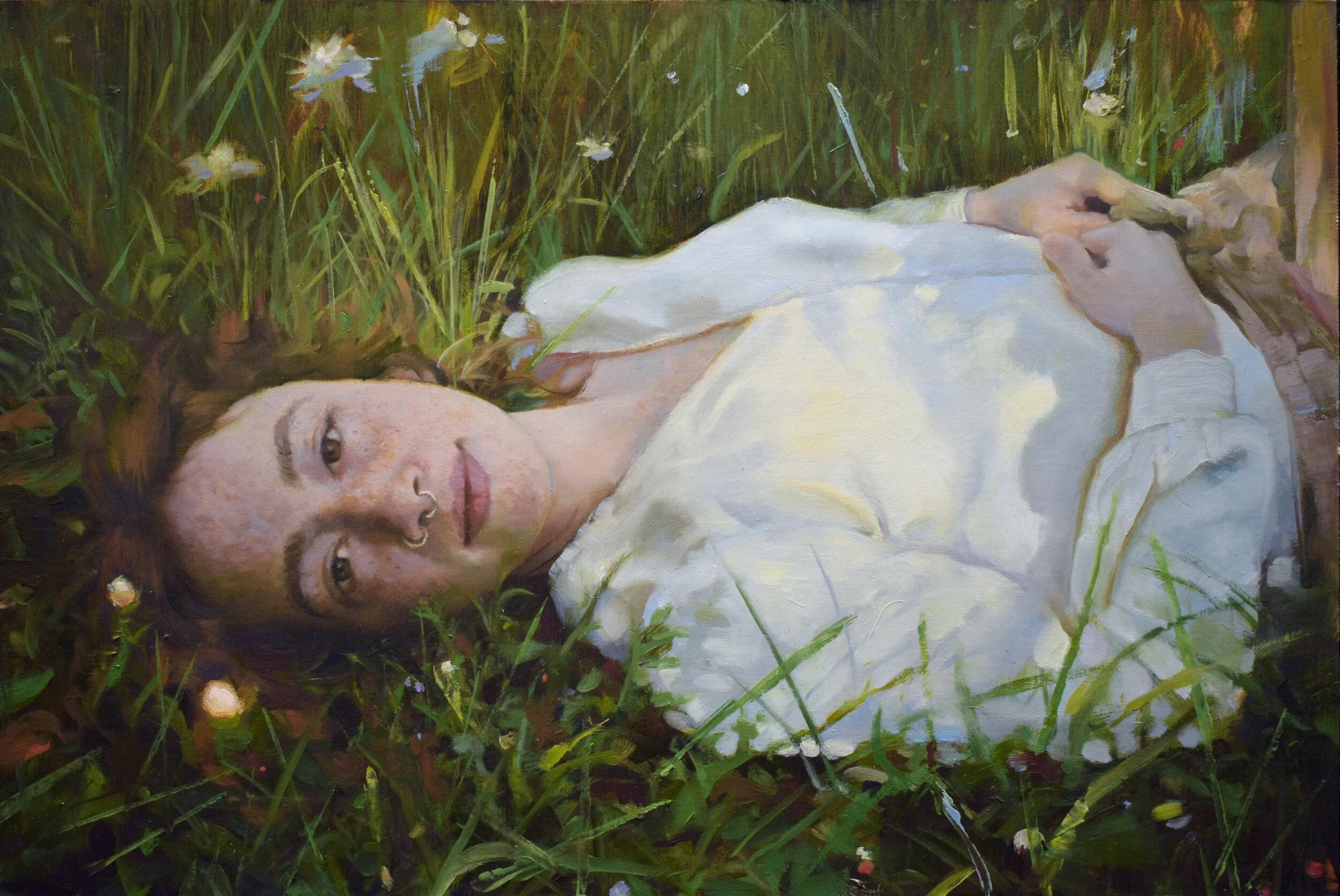
The Living Presence: To Smile or Not to Smile?
In our 'Say Cheese' culture, we’ve been conditioned to believe that a smile is the truest version of ourselves. But for a portrait artist, the goal isn't to capture a reflex—it's to manifest a Living Presence. Explore why the potential for a smile is more powerful than the grin itself, and how the philosophies of Tonalism and Cubism allow a painting to breathe in a way photography never can.
Why I Might Ask You Not to "Cheese"
By Joshua Adam Risner
We live in a "Say Cheese" culture. The second a camera comes out, most of us have a practiced reflex—a quick, muscular "on" switch where we show our teeth and signal to the world that we’re doing just fine. It’s a great tool for a holiday card, but for a painted portrait, we’re looking for something deeper. We’re looking for what I call a Living Presence.
When you look at a great historical portrait, you’ll notice that people rarely grinned. It wasn’t because they were miserable; it was because they understood that a portrait is a long-term investment in a person’s legacy.
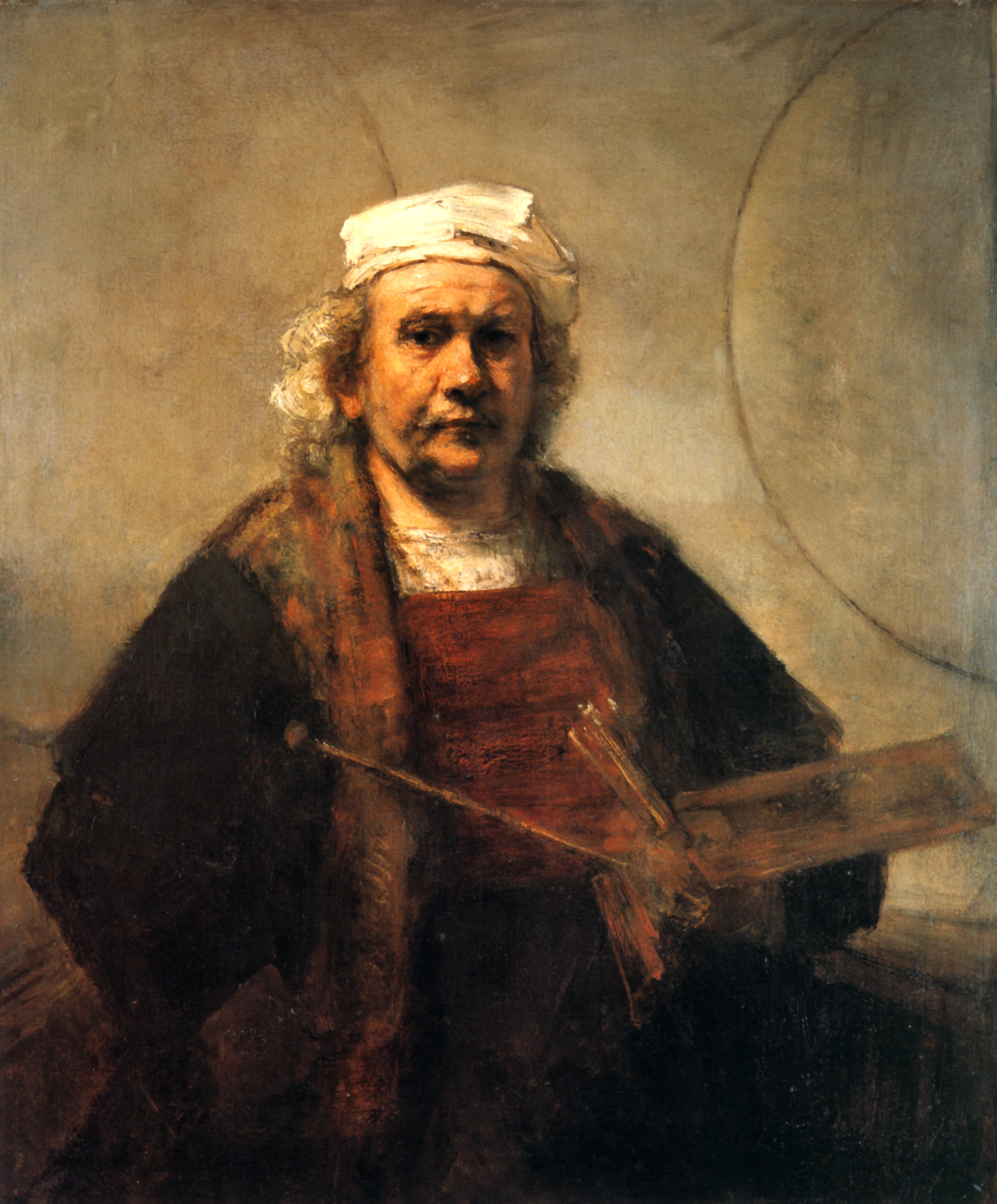
Rembrandt’s Self-Portrait: A gaze that holds the weight of a lifetime.
The Architecture of a Thought
A smile is a fleeting event—it lasts a second and then it’s gone. To freeze that one-second grin in oil can actually flatten a person, reducing a complex human being to a single, static impulse. When your mouth is closed and your expression is neutral, there is a potential for a smile. It creates a bit of a mystery. Because you aren’t telling the viewer exactly how to feel, they have to work a little harder. They start to wonder: What is he thinking about? Who is she, really? That tension is what makes a painting a conversation that lasts for generations. The reason it lasts is because the viewer can bring a bit of themselves to the experience. A smile says it all; a neutral gaze asks a question.

John Singer Sargent’s Lady Agnew: Caught in a living motion.
A Moment That Captures Many Moments
There’s a big difference between a lens and a brush. A camera captures a millisecond. A painting captures a duration. We all know we look different in every photo, but a painting needs to look like all the photos. It needs to speak to the whole of what you look like. The essence.
I often think about the "Simultaneity" found in Cubism. Even though I paint realistically, the spirit of my process is similar. The way Picasso tried to paint the essence of three-dimensional form on a two-dimensional canvas is the same way I try to paint a 3D personality on a 2D canvas. A portrait isn't just "you at 2:00 PM on a Tuesday." It’s a synthesis of your past, present, and future. When we move past the performance of a smile, we find the "inner architecture" of the face—the part of you that exists when no one is watching. The result is a face that doesn't feel "frozen." It feels like it is continuously happening.

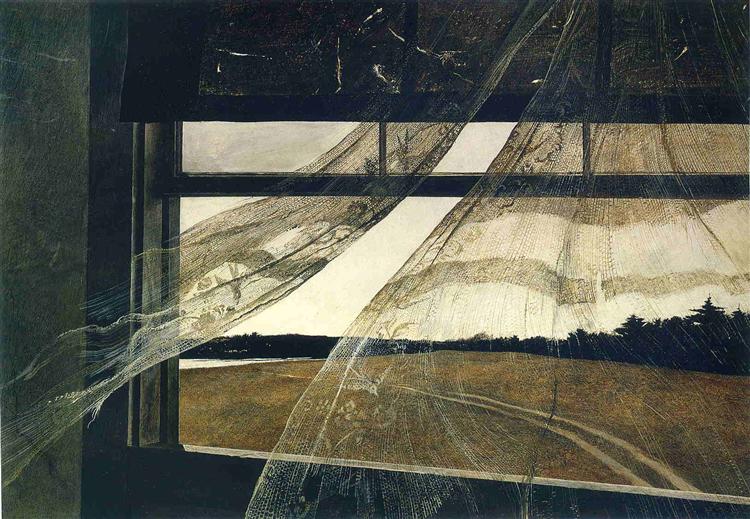
Inness and Wyeth: Capturing the "vapor" of a scene and the passage of time.
The "Atmosphere" of the Soul
I’ve always been inspired by the Tonalist painters, like George Inness. They didn’t just want to paint a static field; they wanted to paint a "living motion." They wanted to capture what it was like to be in the landscape, not just a picture of a moment. I try to bring that same "motion" into my portraits. A serious face isn't "grumpy" or sad—it has gravitas. It suggests a person governed by quiet strength and reason. It suggests something happened before and something will happen after.
Andrew Wyeth understood this perfectly; his work captures a profound, heavy stillness that feels alive because it captures the quiet passage of time. He doesn't just paint a face; he paints the air around the person. This creates a psychological space that the viewer can actually inhabit.
The Portrait as a Chord
If a snapshot is a single note, a portrait with a Living Presence is a chord. It takes multiple notes—different moods, moments, and perspectives—all struck at the exact same time to create a harmony that feels truly human.
When you sit for a portrait with me, my goal is to help that performance drop. We aren't just making a record of what you want to look like, or what you think you look like; we’re creating an experience of who you are. It’s an image that doesn't just sit on the wall—it breathes. It’s a life lived.
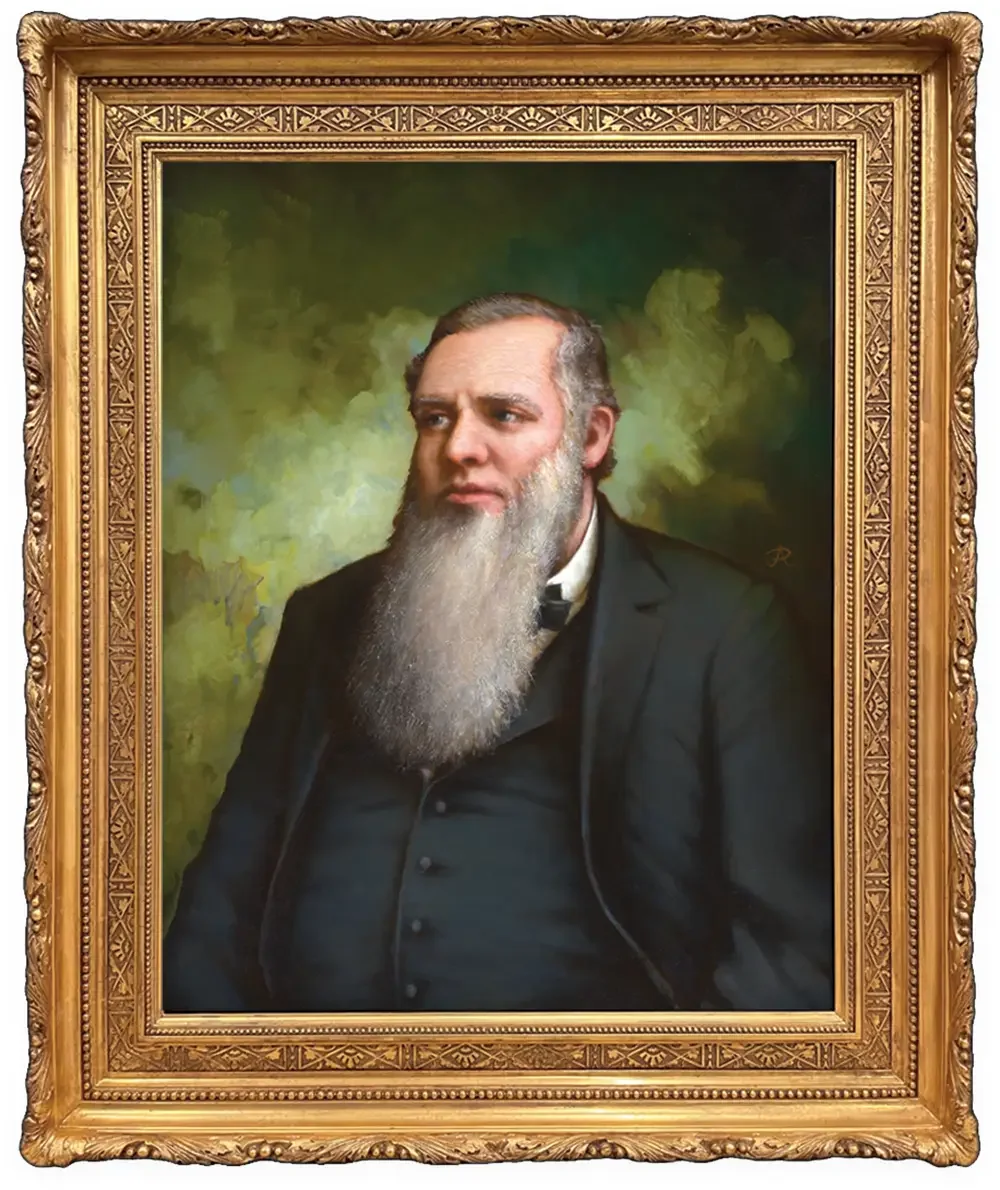
Painting History: My New Portrait of Governor John Bagley
"While the Capitol houses dozens of portraits, its newest addition honors a legacy from the 1870s. Joshua Risner, the Capitol’s artist-in-residence, recently completed a new portrait of Governor John Bagley, who led the state during the transition from a wooden structure to the iconic building we know today. The project required a deep dive into historical records to ensure that Bagley’s likeness and the era's gravitas were perfectly preserved for future generations."
I’m thrilled to finally share a project that has been a true labor of love and history. As the artist-in-residence for the Michigan State Capitol, I recently had the honor of painting a new portrait of Governor John Bagley—the man who actually oversaw the construction of the building where my work now hangs. It was a unique challenge to capture the spirit of a leader from 150 years ago, and I’m proud to see him finally take his rightful place among his peers in the Capitol collection.

Three Rabbits

Three Rabbits, Oil on Linen Panel, Created by Joshua Adam Risner
Captured with a high-resolution scan for exceptional accuracy, this oil painting is part of a small series focused on a simple, earthy palette. This limited color range emphasizes value contrast, an area I consider a strength in my work, and encourages a more symbolic interpretation than a full-color depiction. This approach is something I plan to explore further.
The painting features a tranquil, almost otherworldly figure, likely a young woman, in muted browns and whites. She gently holds a luminous, geometric object, her soft gaze fixed upon it, suggesting quiet contemplation or a mystical connection.
Three rabbits accompany her, each with a distinct presence: a dark one behind, a white one near her lap, and a brown one at her feet. These animals lend an allegorical feel, hinting at nature, vulnerability, or a symbolic relationship with the figure.
The abstract, textured background of swirling whites and pale blue creates a dreamlike atmosphere. A radiant gold halo behind her head adds a spiritual or symbolic layer. The overall impression is one of quiet beauty, inviting reflection on the figure's inner world and her connection to the glowing object and the gentle creatures around her.


